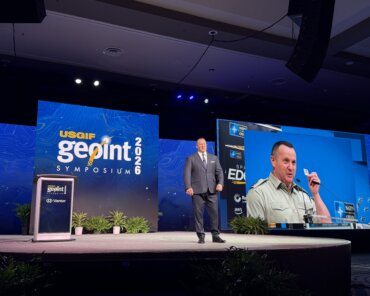
Aurora, Colorado 3 May 2026 – The Foreword day of USGIF GEOINT 2026 opened the week with a clear thesis running through every session: the United States is operating in a finite window of strategic and technological advantage, and how that window is used will define the next decade of geospatial intelligence.
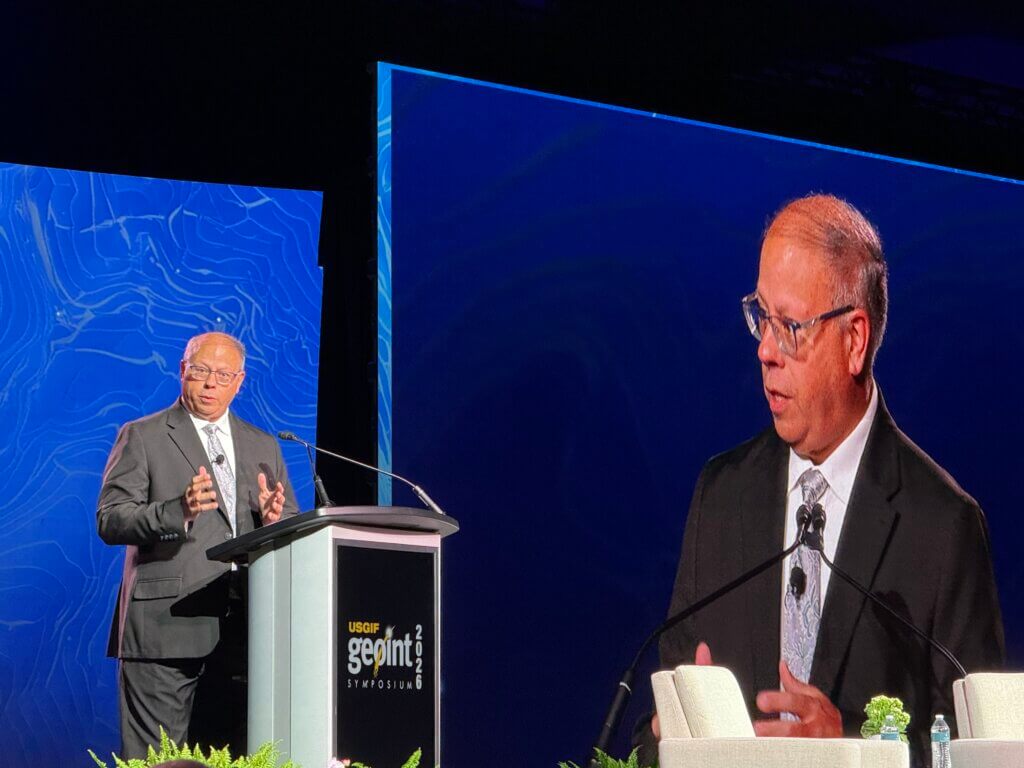
NGA Deputy Director Brett Markham set the tone in the opening keynote. Demand for GEOINT support has risen sharply over the past year, spanning policymakers, warfighters at every level, multiple active conflicts, and humanitarian assistance and disaster relief operations. NGA’s response has been to lean harder into commercial partnerships, expand its programme executive offices from two to five, and stand up a new Rapid Capabilities Office charged with compressing acquisition timelines from years to weeks. Markham was direct that NGA “neither has the time nor the expertise” to build frontier AI models from scratch – and called explicitly on industry to fill that gap. The new A-GAME Computer Vision Model Accreditation Campaign, running through 21 July, is the immediate vehicle.

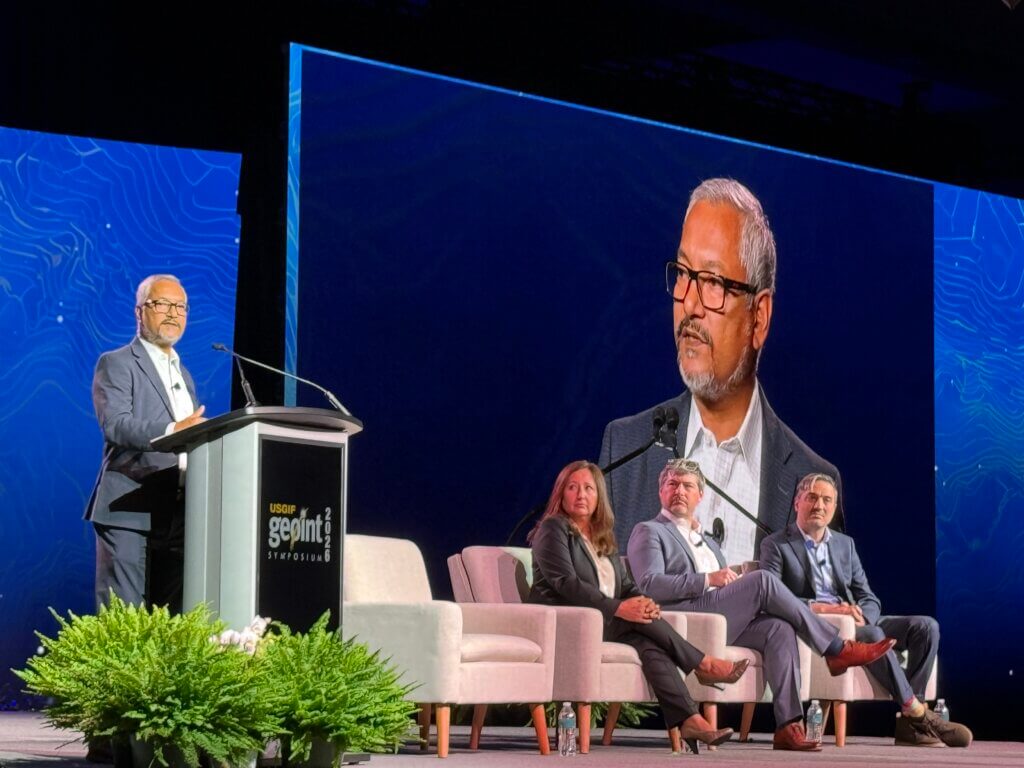
The National Labs panel, moderated by Budhu Bhaduri (Oak Ridge), made the international case for a uniquely American ecosystem: 17 DOE labs, 80,000 employees, 118 Nobel Prizes, $388B in economic returns. Jerriann Garcia (Sandia), Carter Christopher (Oak Ridge), Adam Attarian and David Judi (PNNL) underscored that the labs do not compete with industry – they de-risk technology so industry can scale it. The DOE Genesis Mission was repeatedly highlighted as a real opening for commercial and academic engagement.
The workforce panel, moderated by Treva Smith (NGA College), surfaced the most uncomfortable question of the day. John Wilson (USC) named it directly: if AI reduces net junior analyst positions while increasing senior ones, how does anyone get from junior to senior? Ayman Habib (Purdue), Robert Griffin (UAH) and Jackson Cothren (Arkansas) all returned to the same answer – foundational education becomes more important, not less, in an AI-saturated workforce. Cothren’s closing line landed: “Stop listening to the tech wizards running the LLMs that this is going to be the end-all of what we do. It’s just a tool.”
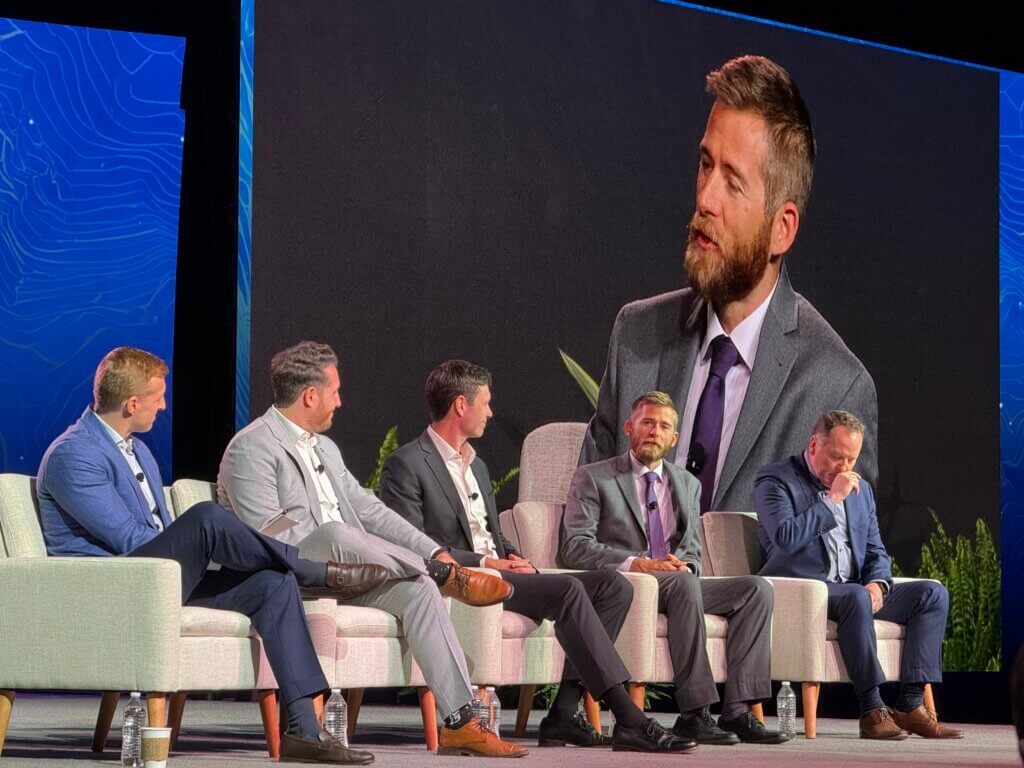
The GPS-denied autonomy panel, moderated by Michael Robbins (AUVSI), brought hard-won lessons from Ukraine. Damien Tyrrell (Shield AI) framed the core challenge: spoofing and bad data the system trusts is worse than denial. Justin Klotz (Leidos), Nick Bousquet (GRVTY) and Hugh Hayden (Niantic Spatial) walked through the alternative-PNT stack now being fielded, the freshness problem in reference data, and the inability to test resilient autonomy at home – now itself a national security gap.
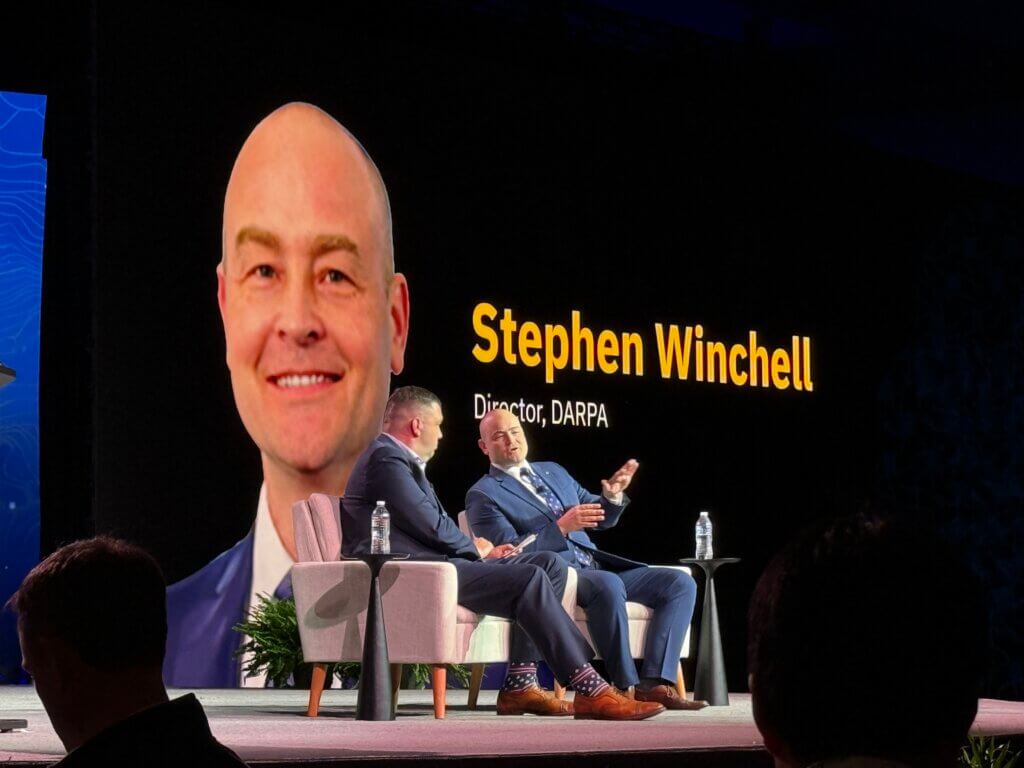
DARPA Director Stephen Winchell closed the day with the most strategically loaded argument of all. The US currently owns roughly 90% of mass-to-orbit. With New Glenn and Starship, that share is expected to rise to 99%-plus – for a limited window of time. The question, Winchell argued, is whether the US converts that temporary advantage into enduring industrial and warfighting capability before the window closes.
A poster-winner-turned-keynote moment from Dr Amanda Fetch on space debris clustering rounded out a day defined by one consistent message: scale, speed, and trust are no longer aspirational – they are the entry ticket.