Ibadan, 15 October 2026. – The U.S. state government of Oklahoma has broken ground on a $7.5 million facility for Dawn Aerospace at Infinity One Oklahoma Spaceport in Burns Flat. The move marks a step toward establishing the New Zealand based company’s reusable Aurora spaceplane operations in the United States. Funded through an appropriation by the Oklahoma state legislature, the project comprises a mission control and operations building and a hangar for the rocket-powered vehicle. Construction is expected to be completed in fall 2027.
The 15,000-square-foot development will include dedicated avionics and payload workspaces, a flight simulation office, conference rooms and other operational areas. The facilities will also support Aurora flight preparation, mission management, payload integration and aircraft maintenance, allowing Dawn to coordinate its engineering and operations activities at the spaceport.

Oklahoma expands its commercial spaceflight ambitions
The project forms part of a broader agreement between Dawn Aerospace and the Oklahoma Space Industry Development Authority (OSIDA), announced in June 2025. Valued at approximately $17 million, the agreement covers an Aurora Mk-II spaceplane, ground-support equipment, training, licensing support and maintenance services. It also provides for an initial operating program of up to 100 flights in the first year, giving researchers and commercial customers access to repeatable suborbital missions.
Meanwhile, the partnership represents a major step toward becoming a national hub for commercial spaceflight for Oklahoma, as the state seeks to expand its aerospace industry and attract investment in related infrastructure, technical services and research. Hosting Dawn Aerospace’s Aurora operations is expected to give customers access to repeatable suborbital flights for technology testing and microgravity experiments. The project could also create opportunities for skilled employment and strengthen Infinity One Oklahoma Spaceport’s role in the emerging commercial space sector.
“When people think about the future of the space industry, they might picture Florida or Texas. But some of the most exciting opportunities are taking shape right here in western Oklahoma,” said State Representative Nick Archer. “Having a company like Dawn Aerospace establish operations in Burns Flat puts our region on the map in an entirely new way. It’s an opportunity to bring new business, attract talent, and show what rural Oklahoma can contribute to a global industry.”
Aurora targets reusable suborbital research flights
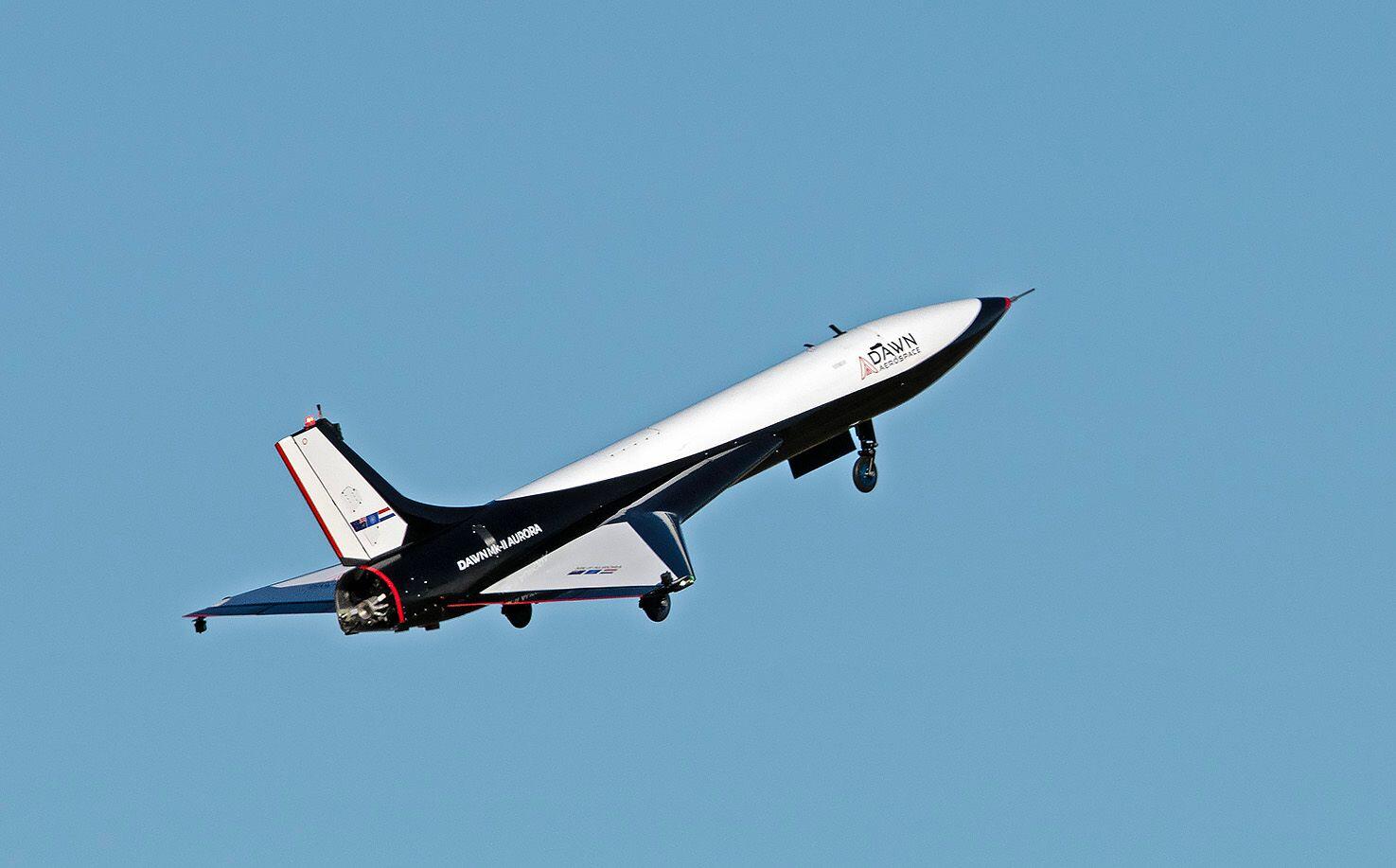
Dawn Aerospace plans to begin flying its Aurora Mk-IIB spaceplane from Infinity One Oklahoma Spaceport in 2027. Unlike conventional rockets, Aurora is designed to take off and land on a conventional runway while using rocket propulsion to reach high speeds and altitudes. The planned Oklahoma deployment will consequently establish a US operating base for the company’s reusable suborbital flight program.
Aurora is being developed to provide frequent access to suborbital conditions for microgravity research, space technology testing and high-altitude experiments. Furthermore, Dawn’s aircraft-like operating model is designed to enable rapid turnaround between flights, reducing the time between experiments and allowing researchers to refine payloads across repeated missions.
One prospective customer is California-based Astral Materials, which has booked up to 100 Aurora flights from Infinity One in 2028 to support its work on advanced materials and semiconductor manufacturing in microgravity. The planned campaign therefore offers an early example of how commercial customers could use Aurora’s repeat-flight capability to test and refine technologies across multiple suborbital missions.
“Aurora is designed to change the economics of spaceflight by making it possible to fly more frequently, with aircraft-like operations and rapid reusability,” said Stefan Powell, CEO and Co-Founder of Dawn Aerospace. “To make that possible, we need more than a runway. We need a place where we can prepare the aircraft, manage missions, and support our customers. Oklahoma offers a unique combination of capabilities and partners who understand what we’re trying to achieve. This facility is a major step toward bringing that vision into service.”