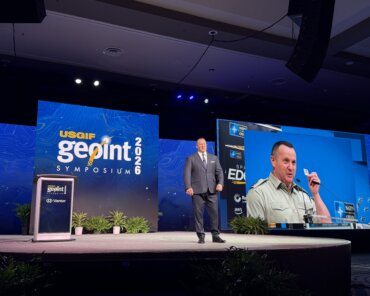
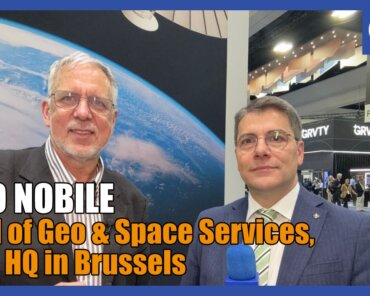
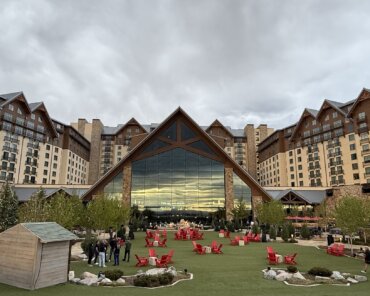
At GEOINT 2026 in Aurora, Colorado, Torsten Kriening and Yvette Gonzalez opened the week from the Gaylord Rockies with a first look at what is already shaping the conversation.

Forward Day set the tone.
Panels ranged from national lab perspectives rooted in decades-old programs to current operational realities, including autonomy in GPS-denied environments and lessons drawn directly from Ukraine. The mix of history and immediacy made for an interesting contrast. Some of the frameworks are decades old. The applications are anything but.
AI kept coming up, but not in abstract terms.
One discussion stood out in particular. If AI is taking over entry-level analytical work, how do you develop the next generation of senior analysts? It is not a theoretical question. It is already starting to affect how organizations think about workforce development.
Elsewhere, the range of topics was broad but connected. From space debris research to unconventional examples like food delivery systems feeding into defense AI testing, the underlying theme was practical application. What works, what scales, and what actually gets used.
Day one now shifts into a more formal program.
Key sessions include NATO intelligence priorities, opening remarks from senior leadership, and a deeper look at how countries such as Germany are positioning themselves within the GEOINT landscape. AI remains a central thread, particularly around scaling geospatial data and operational workflows.
Compared to last year, the tone feels more grounded. Less focus on what AI could do, more on what it is already doing.
That leaves a different kind of question hanging over the week.
Not what is possible, but what happens next.