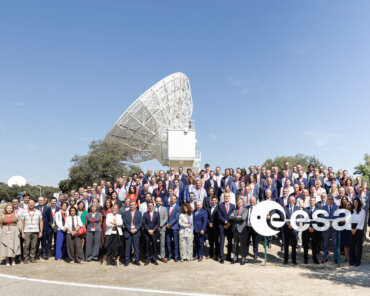
Ibadan, 16 March 2026. – The European Space Agency has awarded a contract to OKAPI:Orbits to lead a project that will bridge the gap between space traffic coordination and air traffic management, marking an important step toward integrated operations in an era of growing launch and re-entry activity.
The contract is in collaboration with the Institute of Space Systems from Technische Universität Braunschweig (TU Braunschweig) and the Institute of Flight Guidance from the German Aerospace Center (DLR).

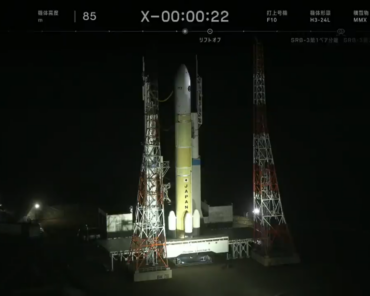
The project responds to the growing interaction between launches and re-entries, and civil aviation and the need for closer integration between space and air traffic systems. As launch rates increase, satellite constellations expand and more spacecraft re-enter the atmosphere, air traffic authorities must be able to anticipate and manage space operations in a timely, reliable, and standardized manner.
To achieve this, OKAPI:Orbits, TU Braunschweig, and DLR will jointly address several key challenges in integrating space and air traffic systems. This includes defining realistic operational scenarios for launches and re-entries, developing methods to quantify uncertainties, and creating tools that allow air traffic management to respond dynamically to space activities.
Furthermore, the interface will support both nominal and off-nominal conditions, including controlled and uncontrolled re-entries, ensuring robust coordination across domains. Likewise, the project will deliver prototype software and visualization tools that translate space traffic risks into actionable insights, supporting near-real-time decision-making. The project consequently represents an important step toward integrated aerospace operations in Europe.
The collaboration consequently unites complementary expertise: TU Braunschweig, with decades of research in space systems and mission safety, contributing scientific expertise in orbital dynamics and risk modeling. Meanwhile, the DLR brings its leadership in air traffic management technologies and operational concepts, ensuring compatibility with existing air traffic management frameworks.
Lastly, OKAPI:Orbits adds its experience in space traffic management and space situational awareness, providing solutions that already help satellite operators plan safe and sustainable missions.