By Thomas Dorame
Bringing the Global Space Community Together – The Promise of Space Symposium
With the 40th Space Symposium fast approaching (April 7-10, 2025, at The Broadmoor in Colorado Springs), we at Space Foundation find ourselves reflecting not only on the event’s impressive history but also on its ongoing impact in shaping the future of the global space ecosystem. Recognized as the premier event in the space community, this milestone anniversary offers a unique opportunity to reaffirm why Space Symposium continues to be the central gathering point for space professionals, policymakers, and innovators from around the world.
In today’s rapidly evolving space community, where new players, emerging technologies, and shifting geopolitical dynamics are reshaping the landscape, the need for global collaboration has never been greater. Space Symposium’s ability to assemble the world’s foremost experts and leaders in one place — regardless of national borders or differing agendas — is one of the reasons why it remains the most impactful event in the space sector.

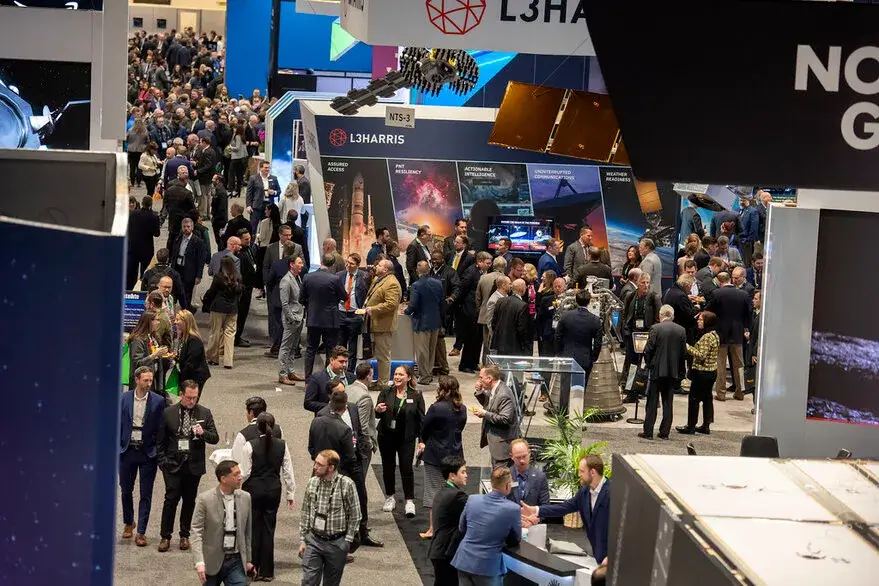
At our previous Symposium, we welcomed over 12,000 attendees from 40+ nations, a true testament to the event’s global reach and significance. With over 1,550 military and government representatives, including 20+ military leaders and 15+ heads of agency, the diversity of participants underscores Space Symposium’s role in fostering international collaboration. As we look toward our 40th gathering, it’s important to examine how we’ve cultivated this global community and how we plan to continue doing so for the next four decades and more. Space Symposium stands apart because it serves as more than just a conference; it is a dynamic, global stage where the most pressing issues in space are addressed by those who have the authority and expertise to shape policies, push technological boundaries, do business, and create partnerships — nationally and internationally. As the space community grows, so does the need for coordinated global connectivity.
This year, in particular, Symposium provides an unparalleled opportunity to bring together space-faring nations and emerging space powers alike. We’ve seen the number of nations engaged with space grow significantly in recent years, from traditional leaders like the United States and the European Union to newer players coming from Asia, the Middle East and Africa. The diversity of countries attending underscores the global nature of space today — and why we need a space assembly that brings these voices to the table.
The discussions at Space Symposium are not just about showcasing new technologies but also about creating shared strategies for addressing the challenges and opportunities facing the space community. From national security concerns in space to the commercialization of low Earth orbit, the issues on the agenda reflect the interconnectedness of the global space ecosystem.
In this year’s symposium, we will welcome leaders from various nations, including ambassadors and the heads of civilian space agencies as well as military commanders and other senior officials, to discuss timely and relevant issues that affect space policy, security, development, and business. With 100+ media outlets covering the event, including major news outlets and specialized space publications, the conversations that take place will have a far-reaching impact. These high-level discussions make Space Symposium more than just an exhibition but rather the place where collaborations and opportunities that will define the future of space are launched.
“As the space community grows, so does the need for coordinated global connectivity.”
We also work closely with international partners to ensure that global issues, such as space sustainability and international treaties, are discussed in meaningful ways. As more nations engage in space activities, the importance of shared agreements and coordinated efforts becomes paramount. Space Symposium provides the perfect venue for these conversations, helping to align different stakeholders with shared goals.
While the global nature of Space Symposium is fundamental to its mission, we also understand that the future of space is driven by emerging technologies and cutting-edge innovations. This year, we are expanding our programming to include new tracks that address the hottest topics for industry, such as artificial intelligence (AI), commercial space stations, workforce development, and advanced propulsion systems.
Our goal is to ensure that Space Symposium is not only a reflection of the present but also a platform that drives forward-thinking discussions about what comes next. AI, for example, is poised to revolutionize every aspect of space in the coming years. By introducing specialized tracks and roundtable discussions on these emerging technologies, we’re creating opportunities for international experts and innovators to share insights, debate the challenges, and find solutions that can be implemented globally.
The diversity of our programming — across sectors like commercial, defense, civil and science — ensures that attendees have a holistic view of what is happening with space. We actively seek input from our partners and stakeholders on the most relevant issues to address, guaranteeing that Space Symposium always reflects the current and future needs of the global space community that it serves.
The magic of Space Symposium lies in the way it brings people together. It’s not just about what happens in keynote sessions or on the exhibit floor; it’s about the informal interactions, the hallway conversations, and the networking opportunities that occur throughout the week. When the world’s top space experts gather in one place, ideas are exchanged, partnerships are formed, and lasting relationships are built.
With 260+ speakers, 245 exhibits, and 31+ hotels in and around Colorado Springs hosting attendees, the symposium provides an environment where space professionals from all sectors can interact and collaborate. Furthermore, our 300+ volunteers will help ensure that every aspect of the event runs smoothly, providing critical support to create an experience that is both informative and inspiring.
With its unique mix of formal presentations, roundtables, and informal meetups, Space Symposium creates an atmosphere where meaningful discussions take place. We prioritize providing opportunities for business-to-business (B2B) and government-to-government (G2G) meetings as well as one-on-one interactions between industry leaders and senior government officials. This facilitates not just knowledge sharing but also tangible partnerships that can lead to new ventures and global collaborations.
As Space Symposium celebrates its 40th anniversary, we are not just looking back at where we were but rather where we are going. In an era of unprecedented change, the need for international collaboration, coordination and innovation has never been more critical, and Space Symposium will always be the place where those things can launch.
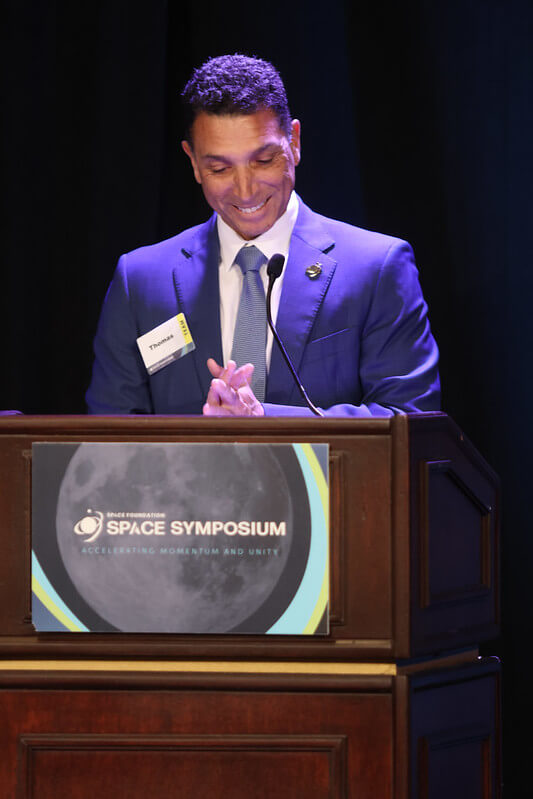
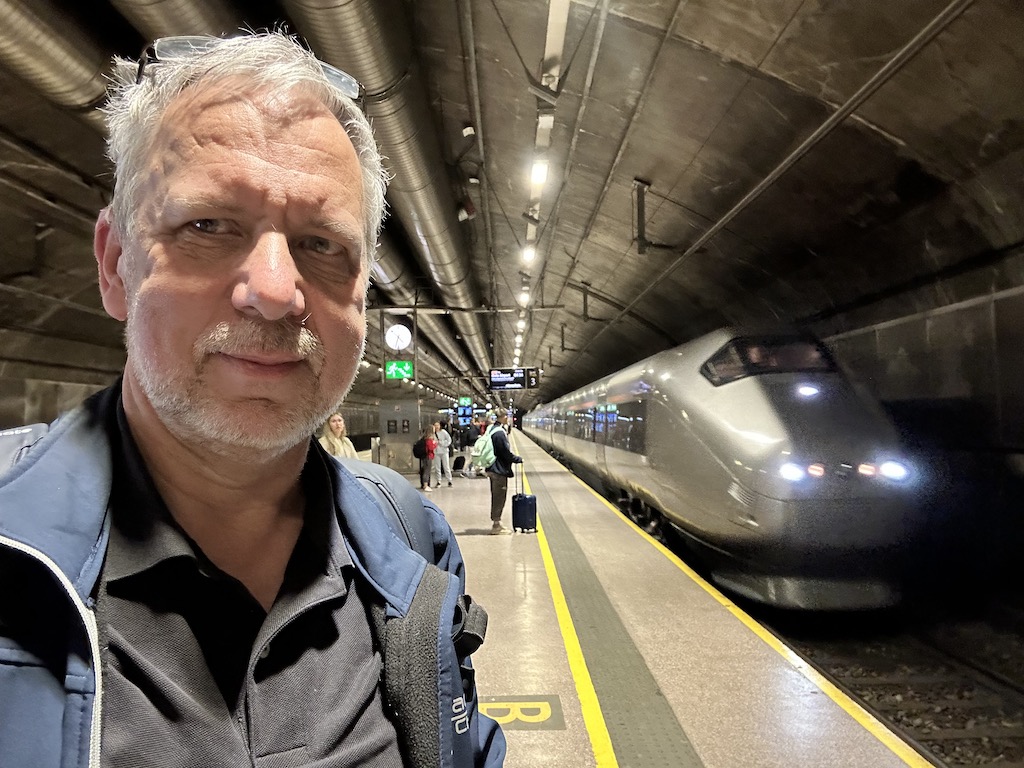
Thomas Dorame, as Senior Vice President leads Symposium 365, the premier source for media and events in the global space ecosystem, offering authoritative news and information and venues for networking and conducting business — including the world-renowned Space Symposium, The Space Report and Symposium 365 Digital Platform. Based in Washington, D.C., Thomas brings a combination of military and civilian education to Space Foundation, complemented by both operational experience and working strategic issues. He engages with government, commercial and education sectors to produce signature programming — live and online — for professionals, entrepreneurs, educators and students to learn, connect and conduct business 365 days a year. Thomas is a graduate of the U.S. Military Academy at West Point with 30 years of active military service and experience managing diverse, multidiscipline organizations. Throughout his distinguished military career, Thomas commanded combat units at several levels and has multiple operational deployments, which include Operation Desert Storm (Kuwait: 1991), Operation Joint Endeavor (Bosnia: 1996), and Operation Iraqi Freedom (Iraq: 2003, 2008, 2010). Well-recognized as a team builder with a strong record of leading large organizations as well as small teams of experts through complex and critical situations, Thomas is also a skilled strategist, with experience in operational planning and policy development. He has been instrumental at all levels in implementing change to improve processes, transform organizations, and implement innovative solutions. Thomas holds a Bachelor of Science in economics from the U.S. Military Academy and a master’s degree in national security studies from Georgetown University, with studies at Oxford University. He also earned a master’s degree in strategic studies from the United States Army War College.