Torsten Kriening opens SpaceWatch.Global’s coverage of Mission-K from a genuinely unusual vantage point: the control room of the Kalkar nuclear facility, where the K in Mission-K comes from.
The setting carries a remarkable history. Built between 1973 and 1985 as a fast breeder reactor, the plant was never switched on. Following widespread anti-nuclear demonstrations and the events of April 1986, the German government decided in 1991 to abandon it altogether – an investment of around $4 billion at the time, equivalent to roughly $9 billion today. Rather than dwelling on that, Kriening turns attention to what the site has become and who has gathered there: Alexander Kluemmet and his team have invited the entire space industry back to Kalkar for two days.

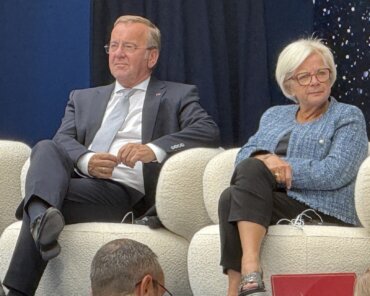
The programme opens with keynotes in the control room itself, featuring Alexander Kleinschmidt alongside speakers from ArianeGroup, Stark Defence, the German Space Command and the German Council on Foreign Relations. From midday, the focus shifts to the Experience Colony – fifteen domes set up inside an exhibition hall where companies demonstrate their applications and technologies, centred on defence and on how quickly threats can be detected and answered.
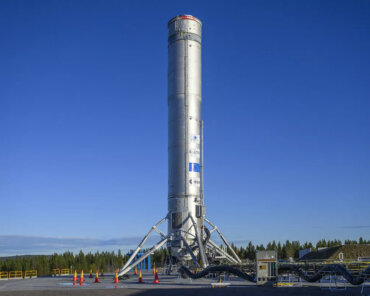
The evening brings a live rocket engine demonstration, followed by the evening programme and, at a quarter to nine, a Space Café 33 minutes session on stage. The location is no accident: Kalkar lies in Germany’s Lower Rhine region, close to Uedem, home to the German Space Command and the Joint Air Power Competence Centre.
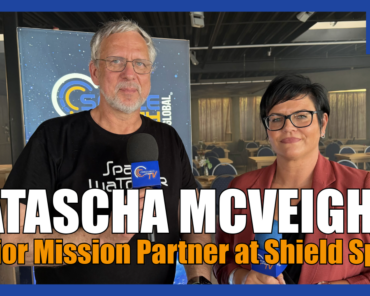
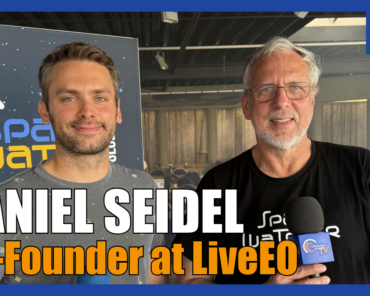
Over the coming days, SpaceWatch.Global will be conducting interviews across the event, speaking with as many participants as possible about what their technologies can actually do. As Kriening promises, these will not be political conversations, but discussions about what genuinely matters – sustaining our environment and our way of living.