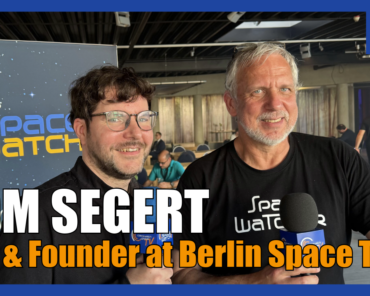
On Day 1 of ILA 2026 in Berlin, a Space Café Fireside Chat with Ralf Nestler of Space.Table turned to a question shaping Germany’s space ambitions: how does the Mittelstand position itself in the market? His guests were Tom Segert, CEO of Berlin Space Technologies (BST), and Sven Sünberg, Managing Director and owner of MBS GmbH in Usingen — two owner-led companies that recently deepened their cooperation, with MBS acquiring a 20% stake in BST to form what they describe as Germany’s first SME-led, fully integrated space ecosystem.

The partnership, the two explained, joins complementary capabilities along the full value chain: BST develops and builds the satellites, while MBS contributes ground stations, operational capacity, launch agreements and decades of mission experience — an end-to-end offer from manufacturing to mission. Both stressed that the Mittelstand’s edge lies in owner-driven speed, agility and a willingness to invest commercially, having grown without large grants or venture capital.
Segert challenged the notion that only large primes can deliver at scale, likening traditional space to baking elaborate “wedding cakes” every few years, when today’s market needs “sheet cake” — fast, in volume and fit for purpose. Without a shift in how Germany procures, he argued, progress will stall. Both called for tranche-based awards, incentives for bold decisions at the working level, and application of the Bundeswehr procurement-acceleration law.
They were careful to frame this not as Mittelstand versus primes, but as a needed balance — with SMEs given responsible roles beyond the “extended workbench.” Citing resilience and lessons from Ukraine, they argued that several decentralised value chains beat a single fragile structure.