At Space Symposium 2026, Torsten Kriening spoke with Thomas Reiter, Director General for Space and Security at the German Federal Ministry of Research, Technology and Space, about Germany’s growing commitment to the space sector.
You are currently viewing a placeholder content from YouTube. To access the actual content, click the button below. Please note that doing so will share data with third-party providers.
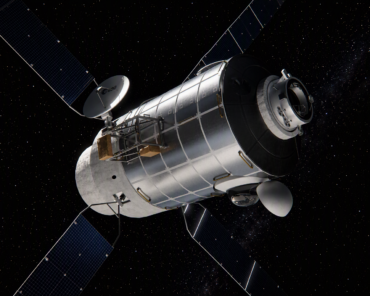
For Reiter, Artemis II is not just a milestone mission, but also a personal one. Having signed the contract for the European Service Module more than a decade ago, he now sees its role in enabling human return to deep space as a clear demonstration of Europe’s capabilities.
This contribution reflects a broader shift in Germany’s approach to space. With increased funding and strong participation at the last ESA ministerial, the country is positioning space as a key pillar of its future industrial strategy. As traditional sectors undergo transformation, space is emerging as a domain with both economic and strategic relevance.
At the same time, efforts are underway to strengthen the connection between civil and military space activities. New innovation initiatives and institutional structures are being put in place to accelerate development and improve coordination across sectors.
Reiter’s perspective, shaped by experience as a fighter pilot, astronaut, and policymaker, points to a clear direction. Space is no longer a niche activity. It is becoming an integral part of national capability and long-term economic planning.
Looking ahead, upcoming missions will continue to highlight Europe’s role in human spaceflight. The expectation that a European astronaut will soon travel beyond low Earth orbit once again underscores the importance of sustained investment and cooperation.
Germany’s message is straightforward. Space is not just about exploration. It is about building the conditions for future growth, security, and technological leadership.