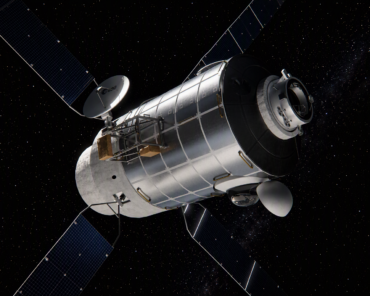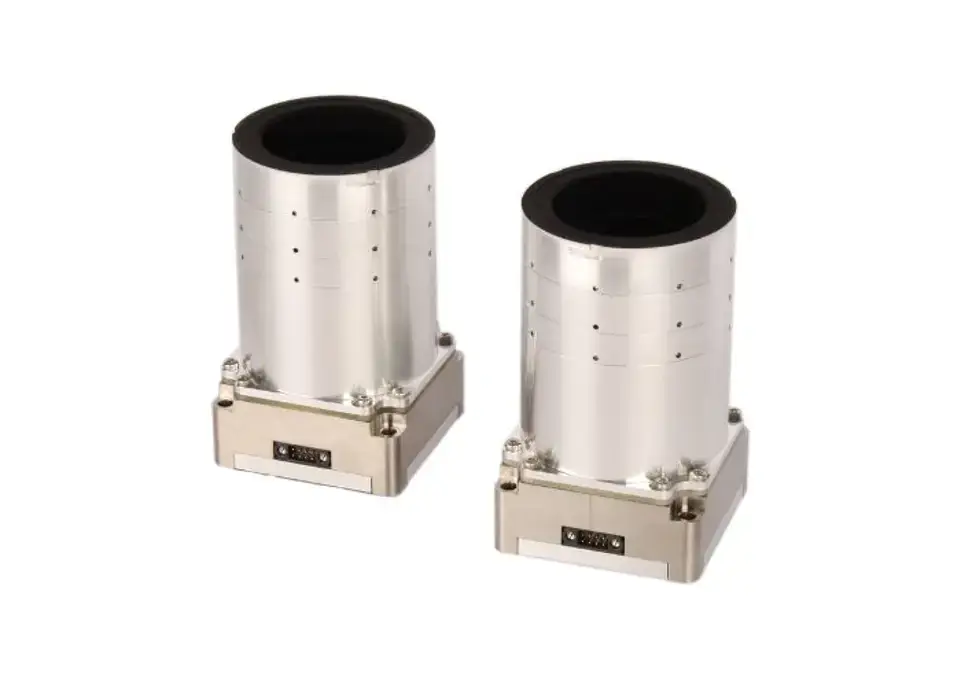
Ibadan, 26 March 2026. – Terma has signed a contract with Indra Space to deliver a T3 Star Tracker for the ESA Draco (Destructive Reentry Assessment Container Object) mission, planned for launch in 2027. Designed as a controlled “crash test” in space, the mission will see a small satellite complete a short operational phase before intentionally re-entering and burning up in Earth’s atmosphere to study how spacecraft disintegrate.
The Draco mission will be ESA’s first instrumented re-entry mission to produce empirical evidence on controlled spacecraft re-entry, and Terma’s T3 Star Tracker will play a mission-critical role by providing continuous, high-precision attitude determination from deployment through final re-entry.

Precise knowledge of the spacecraft’s orientation allows onboard sensor data to be accurately correlated with ground-based observations, enabling ESA and its partners to validate and refine re-entry models with unprecedented accuracy. Moreover, the Star Tracker’s low mass, low power consumption, and high reliability make it ideal for small satellite platforms, where every resource counts and mission assurance is necessary.
“The Draco mission depends on reliable, continuous attitude information to achieve its scientific objectives. Our T3 Star Tracker delivers the precision and robustness necessary to ensure that every measurement gathered during re-entry can be properly interpreted,” explained Günther Lackner, Senior Vice President, Space, Terma.
Current re-entry predictions typically rely on simulation and limited historical data. However, Draco aims to close that gap by providing direct measurements of how spacecraft structures behave under real atmospheric re-entry condition.
The mission will subsequently inform future satellite design, refine debris risk assessments, and support the development of international standards for controlled satellite disposal, critical as the number of operational satellites continues to grow rapidly.
“Terma’s proven track record in high-reliability space systems and their understanding of mission-critical requirements made them the right partner for this pioneering mission,” added Simone Centuori, Indra Space’s Missions Director. “The data we acquire will benefit the entire space community.”