Written by Novi Dewan
Article 1, What Happens in Space Better Not Stay in Space, established why sustainability can’t wait. Article 2, Clearing the Air, mapped the major scientific unknowns around atmospheric impacts. This final article turns to the architecture of coordination: governance, data-sharing, and financing mechanisms that will determine whether space remains usable.
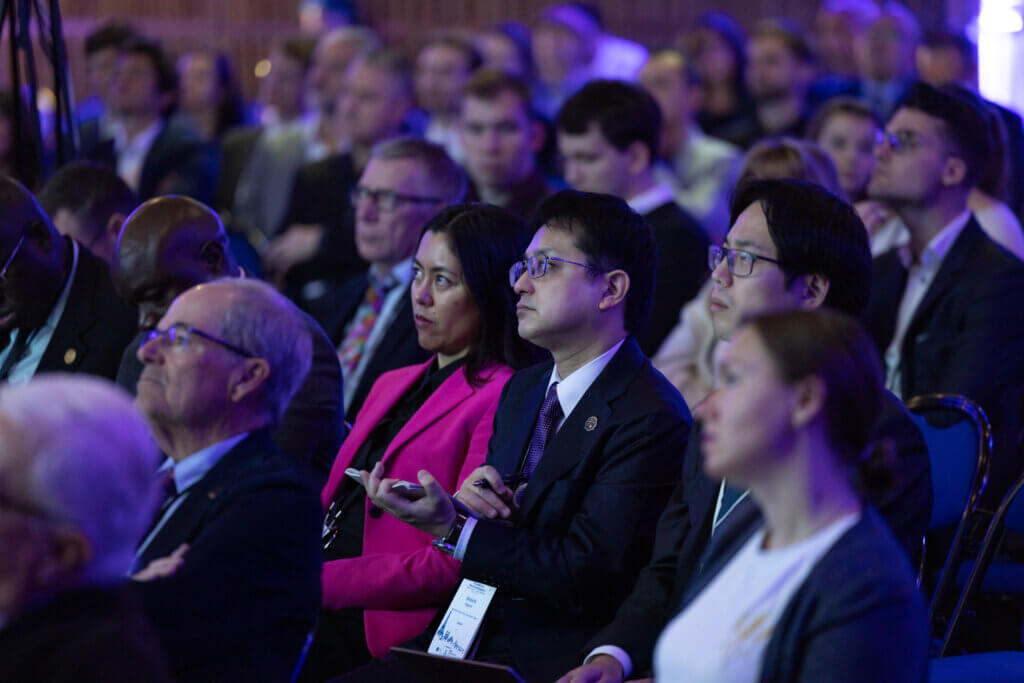
At the Summit for Space Sustainability in Paris, this system-level view came into sharp focus. As scientific understanding of atmospheric effects still evolves, efforts to organise global space traffic, share data, and build common rules accelerate rapidly.

Europe has built and continues to expand a 19-nation EU SST (Space Surveillance and Tracking) network, now operating more than 150 sensors. The UAE has spearheaded the creation of a UN SSA Expert Group, the first global forum dedicated to technical coordination. Across Southeast Asia, ASEAN nations are actively linking data centres, pooling expertise, and building shared capacity. Meanwhile, private actors such as SDA, GMV, Spaceflux, and BULL are already deploying operational tools and setting de facto norms, well ahead of regulation. In parallel, national programmes, from Japan’s multi-billion-dollar Space Strategy Fund to France’s decarbonisation roadmap, continue to shape the contours of a sustainable orbital economy.
This is no longer a question of whether coordination is needed, but how quickly it can be achieved, before crisis makes the decision for us.
Panel: Leadership Roundtable: Progressing on Space Traffic Coordination (and SSA Expert Group)
Panelists: Rodolphe Muñoz (European Commission), Mariel Borowitz (Georgia Institute of Technology), Pakorn Apaphant (GISTDA, Thailand), Hamda Al Hosani (UAE Space Agency)
The roundtable examined how global actors are moving from fragmented tracking efforts to coordinated management of orbital traffic and situational awareness, highlighting both European leadership and emerging international cooperation.
The European Model: From Partnership to Coordination
Rodolphe Muñoz described how the European Union’s Space Surveillance and Tracking (EU SST) network has matured from a “nice-to-have” in 2014 into a “musthave” capability. What began with five member states now includes 19, supported by more than 150 radars, telescopes, and lasers monitoring over 600 satellites. The draft EU Space Act aims to formalize EU SST as a regulated, integrated element of Europe’s space infrastructure.
On early priorities, Muñoz called the new UN SSA Expert Group an opportunity to “coordinate the coordinators.” Capacity-building for nations without SSA systems, he said, is essential, alongside practical deliverables such as contact-point directories, data-sharing frameworks, and standardized terminology. These steps will enable direct operator communication during collision risks and strengthen global participation in orbital safety.
The UAE’s Leadership and the UN SSA Expert Group
Hamda Al Hosani outlined the UAE’s leadership in establishing and chairing the SSA Expert Group under the UN Committee on the Peaceful Uses of Outer Space (COPUOS). The initiative fills a long-standing gap by creating a single global forum to align SSA data, definitions, and interoperability. She described the immediate roadmap: collecting expert nominations, holding two preparatory meetings before the 2026 UN Scientific and Technical Subcommittee, and presenting existing SSA capabilities to build a shared baseline. “The establishment of this group,” she said, “is a step forward for global coordination and trust-building.” Al Hosani emphasized that frameworks are being built with the ecosystem, not for it, to secure buy-in, trust, and long-term follow-through.
Global Expansion and Regional Cooperation
Mariel Borowitz noted that SSA systems have expanded rapidly worldwide, from Japan and India to China and Australia. Only the US and EU currently provide global collisionavoidance services, she said, referencing a joint EU-US study that showed close alignment between their programs. As new networks develop, transparency and shared standards will be crucial to maintaining compatibility and trust.
Pakorn Apaphant added that as incoming chair of the UN STSC in 2026, the expert group’s work will align with the UN’s Long-Term Sustainability Guidelines, linking SSA data to debris-mitigation frameworks and interoperable standards. He also described Thailand’s efforts to connect ASEAN data centres and research institutions, stressing that regional cooperation and emerging-nation engagement are vital to global participation.
Key Insights / Takeaways
- Regional cooperation: The EU SST demonstrates how regional partnerships can
evolve into regulated coordination. - Global alignment: The UN SSA Expert Group will be the first forum to unify SSA
data, standards, and definitions worldwide. - Early deliverables: Contact lists, shared frameworks, and standardized
terminology can enable near-term progress. - Inclusive engagement: Regional partnerships, including ASEAN cooperation,
are central to equitable global participation. - Collaborative frameworks: Building systems with the ecosystem fosters trust,
transparency, and sustainable space-traffic management.
Spotlight Talk: Above and Beyond – SSA Trends to Watch
The session highlighted emerging trends and innovations driving the future of Space Situational Awareness (SSA) and Space Traffic Coordination (STC).
Sharing just four of the many companies and NGOs at the forefront of operational data sharing, sensing, analytics, and debris mitigation presented how they are transforming global space safety through technology, partnerships, and scalable design.
Space Data Association (SDA) – Lorenzo Arona:
An operator-led NGO global platform of more than 30 satellite companies pooling orbital data to improve collision avoidance and operational safety, SDA provides mission-agnostic services across all orbital regimes and has become a permanent observer at COPUOS. Through a new partnership with GMV, it is developing a nextgeneration Space Safety Portal offering advanced conjunction analytics and 24/7 collision-avoidance support.
GMV – Maria Antonia Ramos:
Europe’s SSA and SST leader, GMV integrates radar, optical, and RF sensor networks with AI-driven automation to enable rapid, trusted manoeuvre coordination. Working with ESA, CNES, and EU agencies, GMV is driving standardization and secure datasharing frameworks that will underpin future autonomous space-traffic management.
Spaceflux – Marco Rocchetto:
A UK-based SSA company operating 17 optical observatories worldwide, Spaceflux combines advanced optical and SWIR tracking with AI analytics to provide continuous monitoring. Its “shared value” model builds sustainable SSA capacity through local partnerships, such as in Thailand with GISTDA and national research institutes.
BULL Corporation – Yasuhito Uto:
A Japanese startup pioneering lightweight, power-free post-mission disposal (PMD) technology, BULL’s “Horn” drag-sail modules for satellites and launch vehicles provide independent, low-cost deorbiting solutions. The company advocates balanced regulation to ensure that advancing debris-prevention technologies does not stifle industry growth.
Spotlight Talk: Staring into the Valley of Death: How Does the Space Sustainability Segment of the Space Economy Reach the Other Side
Speaker: Candice Massucci Templier
Candice Massucci Templier examined the economic and structural realities of the space sustainability market. She framed sustainability as a continuum linking activities on Earth, around Earth, and in orbit, with in-space logistics such as situational awareness, debris removal, refuelling, and life extension forming its operational core.
Between 2020 and 2024, space situational awareness (SSA) absorbed $18 billion, or 87 percent of global space-logistics funding, 95 percent of it public and 82 percent from defense budgets. Other logistics services collectively received under $2 billion. The imbalance, she said, shows SSA’s maturity but also the fragility of the wider sustainability market.
Forecasts estimate total space-logistics revenue at $4.5 billion annually within a $600 billion global space economy, with SSA contributing $2.5 billion and life-extension services approaching $1 billion. Today, logistics generates only $265 million, “one of the smallest yet most strategic segments” of the industry.
Templier identified three barriers: immature technology, fragmented standards, and launch bottlenecks. Yet she highlighted rising in-orbit demonstrations, hybrid public-private funding, regulatory momentum, and the growing cost of inaction as signs the sector is preparing to cross the economic chasm.
Panel: Staring into the Valley of Death: How Does the Space Sustainability Segment of the Space Economy Reach the Other Side
Moderator: Christopher Johnson, Secure World Foundation
Panelists: Cédric Balty (Thales Alenia Space), Masayasu Ishida (SPACETIDE Foundation), Fani Kallianou de Jong (EBRD), Laurence Monnoyer-Smith (CNES), Nick Shave (Astroscale Ltd.)
Expanding on Candice Massucci Templier’s economic analysis, this panel examined how the space sustainability market, one of the smallest parts of the $600 billion global space economy, can survive the “valley of death” between research demonstration and commercial maturity.
Financing and Market Readiness
Fani Kallianou de Jong explained why the European Bank for Reconstruction and Development, long focused on climate and infrastructure finance, now views space as a cross-sector enabler. Operating in 40 countries and owned by 75 shareholders, EBRD invests in agriculture, energy, and transport projects that already depend on space data. In 2023 it committed €9.7 billion, 58 percent of its portfolio, to green-transition investments. She urged space companies to engage multilateral financiers able to bridge the gap between venture funding and commercial debt.
Anchoring Public Investment
Masayasu Ishida outlined Japan’s $7 billion Space Strategy Fund, already distributing $4 billion to 46 projects in satellites, launch systems, and “common technologies.” Each project includes debris-mitigation measures, with the government acting as an anchor tenant to stimulate early demand. “The fund is a cornerstone for a sustainable ecosystem,” he said, linking demonstration, procurement, and market expansion.
Industry Leadership and Circular Goals
Nick Shave described Astroscale’s plan to make in-orbit servicing routine by 2030 and achieve a circular space economy by 2035. The company is developing nine spacecraft across four continents for debris removal, refuelling, and inspection. He stressed that institutional programs such as ELSA-M, co-funded by ESA and the UK Space Agency, are vital to raise technology readiness and prove commercial feasibility.
Industrial Transformation and Policy Action
Cédric Balty said Thales Alenia Space has made sustainability one of its strategic pillars, embedding it internally, pushing toward circularity, and linking innovation to global challenges. Through initiatives such as the EU Space Law, PFCR Product Footprint Rules), and France’s Decarbonization Roadmap, the company partners with ESA, CNES, and EU agencies on demonstration missions. “We know how to innovate; now we must industrialize,” he said.
National Policy and Decarbonization
Laurence Monnoyer-Smith presented France’s voluntary national roadmap, uniting the entire space ecosystem to measure and cut emissions. Achieving net-zero by 2050, she warned, will demand new technologies, data optimization, and coordinated innovation.
Shared Outlook
Panelists agreed that bridging the Technology Readiness Levels (TRL) 4–8 funding gap, standardizing interfaces and SSA data, and expanding hybrid public-private programs are essential to move sustainability from promise to practice. As Balty summarized, “Sustainability has to become sustainable itself.”
Key Insights / Takeaways
- Bridging the funding gap: The “valley of death” lies between TRL 4–8;
governments and development banks must sustain programs through
demonstration to market. - Public investment as anchor: Japan’s US $ 7 billion Space Strategy Fund and
France’s decarbonization roadmap show that state demand and regulation can
de-risk innovation. - Circular economy timeline: Astroscale targets routine in-orbit servicing by
2030 and a fully circular space economy by 2035. - Industrial ecosystem approach: Thales Alenia Space and CNES stress open
innovation and industrialization beyond R&D. - Financial innovation: Multilateral banks like EBRD offer non-traditional longterm green funding aligned with Paris Agreement goals.
- Data and standardization needs: Common interfaces and SSA data formats
are essential for scaling servicing markets. - Humanity-centric purpose: Sustainability in space must directly contribute to
sustainability on Earth and within planetary boundaries.
Conclusion: Action before Laws
Antoine Lavoisier’s insight echoed through several sessions: “There is no mass created nor lost. It is always going to be transformed.” The question is into what, and can we make that transformation safer for all?
Consensus we may never reach. The Long-Term Sustainability Guidelines remain largely unimplemented at the national level, leaving a gap between aspiration and enforceability. Throughout the Summit, one truth resonated: coordination must precede management, and harmonization of laws is essential for clarity, reduced bureaucracy, and the prevention of regulation shopping. Yet lawmaking depends on consensus, and consensus takes time; time the orbital environment does not have.
As Marco Antonio Chamon, President of the Brazilian Space Agency, reminded participants, “This calls upon the use of incentives, economic ones, to generate momentum.” Laws require consensus; consensus takes time; incentives can act now.
My conclusion is that two forces have extrapolated human cooperation in unbelievable ways: incentives and emergencies.
In that spirit, lesson from Earth (one I once opened a panel on open Innovation with) bears repeating before we look skyward – a powerful case of cooperation born from emergency: the 2010 Chilean mine rescue. Thirty-three miners were trapped 700 meters underground, and the breakthrough solution, the Fénix capsule, did not emerge from one institution but from an unlikely collaboration between NASA, a Chilean naval engineer, and a private drilling company. All 33 miners were rescued after 69 days.
Before an emergency compels us, incentives must drive us.
That same spirit of pragmatic collaboration must now define our work in space. As Pakorn Apaphant of GISTDA noted, “We don’t have to wait for the diplomatic process.” Best practices can start now; feedback can flow upward to COPUOS so policymakers can act with greater urgency.
Rodolphe Muñoz of the European Commission put it plainly: “It is time for the people in this room, academia, policy, and industry, to participate in a great adventure.”
The next chapter of that great adventure has already begun. The 8th Summit for Space Sustainability will convene in Brazil on November 4–5, 2026, which promises even more action and accountability.
May cooperation not only catapult progress but also transform our shared orbit into proof of what humanity can achieve together – by design, not by emergency.

Novi Dewan is an engineer, author, and speaker with an MBA. She has a decade of experience in logistics, technology consulting, project management in companies like Amazon, Capgemini and DHL. Based in Dusseldorf, she is currently pursuing her PhD with her first two papers focused on humanitarian logistics and her final one exploring space traffic coordination and space sustainability. Novi loves drawing unexpected parallels across the entire spectrum of logistics – on Earth and far above it. In her free time, you might catch her paragliding in very near-Earth orbit or hanging out with her furry Maltese co-pilot, Einstein.