by Shrawani Shagun
“What if an asteroid could change the fate of Earth’s economy and reshape our legal system?”
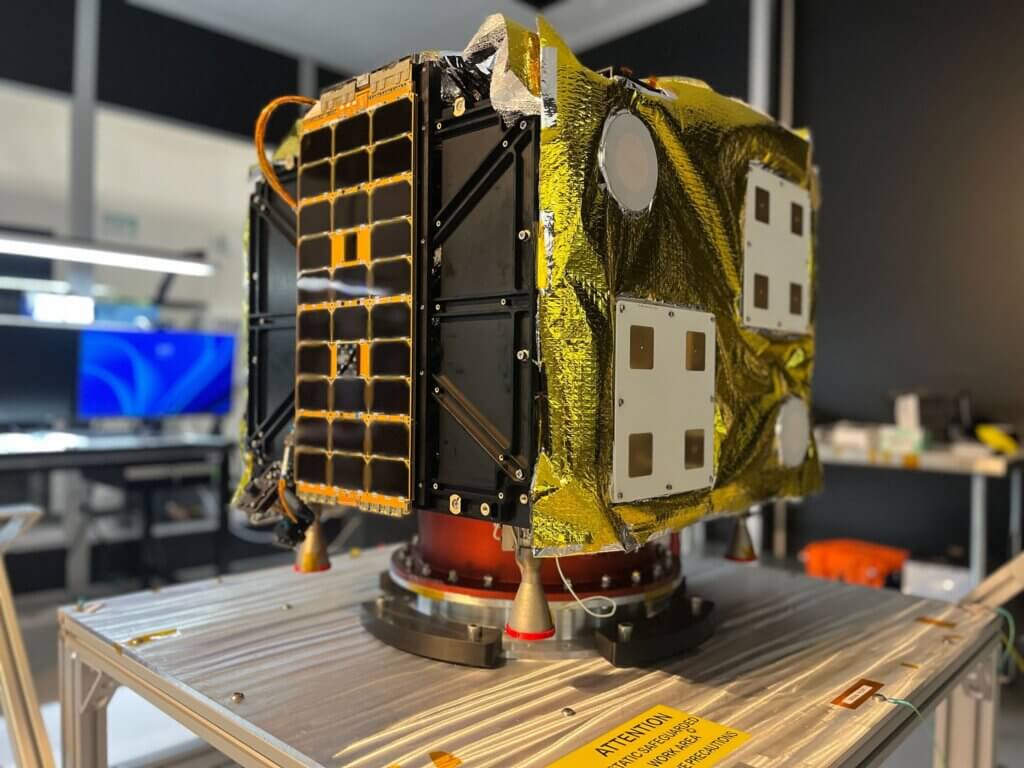
The recent discovery of an asteroid containing a high concentration of precious metals has sparked renewed discussions about the future of space exploration. This finding has generated much interest among investors and space-faring nations, positioning space mining as the next frontier for economic growth. The potential is undeniable: vast, untapped resources beyond our planet could revolutionize global economies, creating new industries and unprecedented wealth.
The promising opportunities of space exploration also bring significant legal and environmental challenges. Who should have the right to exploit space resources, and how can we prevent environmental damage in space, where it may be less visible but just as long-lasting? Belgium has taken a unique approach by passing an ecocide law that extends legal protections to the space environment, prompting us to reconsider how we govern space. This is not the first time humanity has experienced a rush for resources; the 19th-century Gold Rush transformed economies and resulted in environmental devastation. Now, we face a similar situation on an interstellar scale, with consequences that could reach far beyond our planet.

Belgium’s Ecocide Law: A Close Reading
Professor Philippe Sands, a leading advocate for international ecocide laws, has observed, “Recognizing ecocide as an international crime is not just about punishment; it is part of that broader process of changing public consciousness, recognising that we are in a relationship with our environment.”
Belgium has taken a unique approach by extending the concept of accountability beyond Earth’s boundaries and into outer space.
“Establishing a legal framework that transcends national borders, holds all space actors accountable, and promotes sustainable practices is essential to preserving the space environment.”
The country has implemented progressive ecocide legislation that criminalizes severe environmental harm not only on Earth but also in space. According to Article 96 of the Belgian Criminal Code, ecocide is any action causing “widespread, long-term, and severe” damage to the space environment. This includes activities such as the reckless mining of celestial bodies, pollution contamination, or the creation of space debris that compromises the stability of the space environment. The concept of ecocide has gained significant traction over the past decade, with growing recognition of its role in addressing large-scale environmental damage. While countries like France and Sweden have enacted ecocide laws to protect terrestrial ecosystems, Belgium is the first to explicitly include space in its legal framework. This legislative leap reflects an understanding that the space environment, much like Earth’s, is vulnerable to irreversible harm from human activities if left unregulated. It challenges the long-held assumption that space is a limitless expanse, exempt from the legal responsibilities we apply on Earth.
Unlike the Outer Space Treaty (OST) of 1967, which primarily regulates state conduct, Belgium’s law acknowledges the need to hold individuals and corporations accountable in a domain often treated as a legal vacuum. This represents a shift from merely preventing “harmful contamination” to actively imposing liability on those who cause damage, potentially influencing future amendments to the OST or developing new international agreements.
Economic Potential vs. Legal and Ethical Imperatives
The recent discovery of a mineral-rich asteroid has sparked discussions about whether economic opportunities in space should come before environmental preservation. Countries like the United States and China, as well as private companies like SpaceX and Blue Origin, are eager to explore the potential of space mining. Space mining could lead to the extraction of trillions of dollars worth of rare metals, driving technological advancements and opening up new markets.
The recently identified mineral-rich asteroid is estimated to contain precious metals like platinum and gold valued at trillions of dollars. This astronomical wealth could surpass the annual GDP of many nations, making it an enticing target for mining operations. However, the European Space Agency (ESA) warns that over 36,500 objects larger than 10 cm already orbit Earth, contributing to an increasingly hazardous space environment. Large-scale mining activities could exacerbate these risks, creating further challenges for space sustainability.
This economic potential is accompanied by significant risks. Unlike Earth, where environmental impacts are often visible and subject to regulation, space lacks comprehensive norms and regulatory bodies capable of enforcing environmental protections. This regulatory gap creates opportunities for activities that could cause irreversible harm to the space environment, such as the generation of debris or the depletion of valuable resources from celestial bodies. Without careful management, such actions could undermine scientific research and space exploration’s long-term viability.
Belgium’s ecocide law aims to mitigate these risks by establishing a legal framework that holds individuals and corporations accountable for their actions in space. It is a practical application of ethical principles, encouraging us to consider the long-term consequences of space activities. For example, if a company were to mine a resource-rich asteroid without addressing the resulting debris, Belgian law could hold it criminally liable for causing “widespread, long-term, and severe” environmental damage. This sets a precedent for sustainable practices in space, demonstrating that economic ambitions must be balanced with a commitment to preserving the cosmic environment. As private enterprises and nations pursue these lucrative opportunities, accountability becomes increasingly critical, especially for non-state actors operating in space.
Implications for International Space Law
With private companies like SpaceX and Blue Origin leading the charge in space exploration, the role of non-state actors in space has become increasingly significant. These entities operate outside the direct control of national space agencies, raising critical questions about how to ensure accountability for actions that could have long-term impacts on the space environment. Belgium’s ecocide law could serve as a template for imposing such responsibilities, potentially driving a shift towards stricter international standards that hold private actors accountable. The Belgian law has the potential to reshape international legal norms, especially in the context of recognizing ecocide as a crime under the International Criminal Court (ICC). This approach could serve as a model for extending such laws to outer space, considering the transnational nature of space activities. Suppose you want to learn more about the global movement towards recognizing ecocide as an international crime. In that case, you can explore in-depth discussions in articles like “Should Ecocide Be an International Crime? It is Time for States to Decide” and “An International Crime of Ecocide: What is the Story?
“The international community also has a crucial role in strengthening the Outer Space Treaty (OST) to include robust environmental protections, as the existing provisions lack enforcement mechanisms. Belgium’s law criminalizes severe environmental damage and introduces accountability that could inspire other nations and inform multilateral agreements. Expanding the scope of the Rome Statute to include space-related ecocide would be a challenging but potentially transformative step, requiring consensus among the Assembly of State Parties and careful negotiation over defining terms in the context of space. Nevertheless, Belgium’s example provides a valuable starting point for these discussions, demonstrating how national laws can catalyze international action.
Aligning Legal Frameworks with Ethical Principles
The foundation of Belgium’s ecocide law is strongly supported by the ethical philosophies of Aldo Leopold’s “land ethic” and Arne Naess’s “deep ecology.” Leopold’s approach advocates for extending moral consideration to the “biotic community,” viewing ecosystems not just as resources but as entities with intrinsic value. Applying this philosophy to space means recognizing asteroids, planets, and other celestial bodies as integral parts of a larger cosmic ecosystem that deserve respect and protection.
“The potential is undeniable: vast, untapped resources beyond our planet could revolutionize global economies, creating new industries and unprecedented wealth.”
Arne Naess’s “deep ecology” concept further emphasizes the interconnectedness of all life forms and natural entities, calling for a shift from human-centred thinking. In the context of space exploration, it challenges us to recognize the inherent worth of the space environment itself—beyond its potential for economic gain. While space mining offers vast economic opportunities, these ethical frameworks remind us that our actions in space should be guided by stewardship rather than exploitation, ensuring that our reach into the cosmos respects its delicate balance.
Conclusion: A Call for Global Action
Belgium’s extension of ecocide law to outer space is a significant step forward in space governance. It is a model that other nations could adopt to encourage responsible space exploration. As space-faring nations and private entities continue to expand the boundaries of exploration, international cooperation is urgently needed. Without a shared set of standards, there is a real risk of a “race to the bottom” in space, where environmental protections are overlooked in favour of short-term economic gains. A multilateral approach, potentially led by the United Nations Committee on the Peaceful Uses of Outer Space (COPUOS), could help establish a binding international framework for space environmental protection. Building on Belgium’s example, the international community has the opportunity to create a comprehensive legal regime that balances economic interests with the imperative to protect the cosmic environment. This approach would ensure that the promise of space exploration is accompanied by a commitment to its preservation, securing a sustainable path for future generations. COPUOS, with its mandate to promote international cooperation in the peaceful uses of outer space, could play a pivotal role in bringing nations together to agree on new standards for space environmental protection. This could include defining key terms like ‘severe damage’ in the context of space and setting guidelines for sustainable space mining practices.
Belgium’s pioneering ecocide law reminds us that we must not forget our responsibilities as we look to the stars. Establishing a legal framework that transcends national borders, holds all space actors accountable, and promotes sustainable practices is essential to preserving the space environment. Drawing inspiration from Belgium’s leadership, the international community can ensure that humanity’s next great frontier does not come at the expense of the environments that make exploration possible. Policymakers, legal scholars, and space industry leaders must act now to integrate sustainability principles into space law. By embracing Belgium’s innovative approach, we can forge a path that respects the promise of space exploration and our shared responsibility to protect the cosmic environment.

Shrawani Shagun is a research scholar and legal expert specializing in space law, focusing on environmental sustainability, climate action, and the regulation of space activities. Currently, she is pursuing PhD in Space Law at the National Law University, Delhi. She is a recipient of a Max Planck Scholarship. She is committed to addressing the pressing legal and ethical challenges of increased space activities.