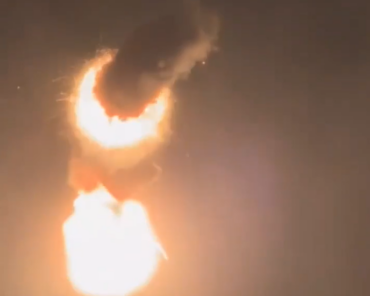
Ibadan, 13 August 2024. – A Chinese rocket launch involving the Chinese rocket body, CZ-6A from the Taiyuan Satellite Launch Center, has reportedly resulted in a fragmentation that subsequently created about 700 new debris objects in low earth orbit.
The fragmentation followed the launch of CZ-6A on 6 August at ~06:42 UTC and the deployment of its 18 payloads. Several space outfits have independently reported the fragmentation, including LeoLabs, Slingshot Aerospace, and Okapi:Orbits. The 18 mission payloads are the first batch of satellites for the Qianfan communications mega-constellation, operated by Shanghai Spacecom Satellite Technology (SSST).
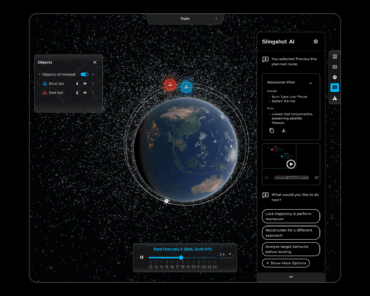
Slingshot Aerospace disclosed that it is tracking more than 50 pieces of space debris. Meanwhile, Okapi: Orbits reported that over 800 pieces of debris were generated in the past two months from fragmentations of objects in orbit, including CZ-6A and RESURS-P1 which happened in July. This is the second time a CZ-6A rocket body has recently experienced a significant breakup event in LEO. On 12 November 2022, a CZ-6A rocket body similarly exploded in LEO (800 km to 900 km).

Likewise, LeoLabs reported that the resulting 500+ debris fragments were distributed between ~320 km and ~1,500 km. Furthermore, the collision probability at the center of the debris cloud at 830 km increased by 9%. LeoLab analysis also indicated that an issue related to the spacecraft’s propulsion system likely triggered the event and not a collision-induced fragmentation.
Audrey Schaffer, Vice President of Strategy and Policy of Slingshot Aerospace, remarked: “Events like this highlight the importance of adherence to existing space debris mitigation guidelines to reduce the creation of new space debris and underscore the need for robust space domain awareness capabilities to rapidly detect, track, and catalog newly-launched space objects so they can be screened for potential conjunctions.”