Ibadan, 14 August 2024. – Airbus Defence and Space Limited and Astroscale Limited (“Astroscale UK”) have signed a Memorandum of Understanding (MoU) to explore collaborative opportunities in the field of in-orbit servicing and space debris removal.
This strategic partnership aims to leverage the strengths and capabilities of both companies to address the growing challenges of space sustainability and satellite longevity, with a particular focus on advancing the UK’s efforts in the in-orbit servicing and manufacturing industry and building a circular economy in space.
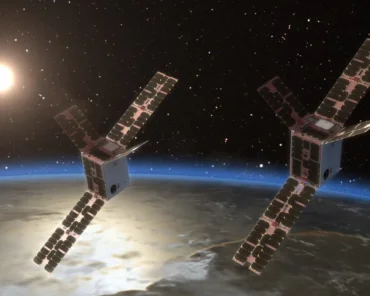
The partnership primarily aims to explore innovative methods to identify, capture, and remove space debris from Earth’s orbit. This is critical for ensuring the safety of current and future space missions and maintaining a sustainable space environment. The partnership also intends to develop technologies and solutions for the maintenance, repair, and enhancement of satellites while in orbit. This consequently aims to extend the operational lifespan of satellites, reduce space debris, and improve the overall efficiency of space operations.

In addition, the partnership between Airbus and Astroscale UK looks to enhance capabilities for precise and safe satellite maneuvring in space. This includes the development of sophisticated navigation and docking technologies essential for satellite servicing and debris removal missions. Likewise, both parties will explore new possibilities for constructing and assembling spacecraft components directly in space. The partnership will also explore continued operation and extended lifespan of existing satellites through in-orbit refuelling and other services
Speaking on the MoU, Managing Director of Astroscale UK, Nick Shave, said, “Our joint efforts will not only enhance the longevity and efficiency of space assets but also contribute to building a circular economy in space, where resources are reused and repurposed. This collaboration is crucial for addressing the challenges of space debris and ensuring a sustainable space environment for future generations.”