By Torsten Kriening, Publisher, SpaceWatch.Global. ISU alumnus (EMBA12).
Berlin, 16 July 2026 – Published open access, like everything I have written on this. No paywall, no registration. If you have information, a perspective, or a correction: [email protected]
This note reflects what was known to me, on and off the record, as of 08:00 CEST on 16 July 2026. This is a fast-moving story; where people have spoken to me in confidence, their accounts have informed my understanding but are not reported here as fact. I will follow up as more is confirmed on the record.

I said on Saturday that I did not have the answers, and on Monday that some of them were beginning to arrive. Five days and several hundred messages later, I have a great deal more than I did – and I am going to be careful with it.
This is my third and, for now, final note on what has happened to the International Space University. It is not a verdict. Verdicts require a court, or at least a full and open accounting, and neither exists yet. What follows is what I can state with confidence, what I cannot yet state at all, and – because this is the part that matters more than any governance question – what the people caught in this can actually do this week.
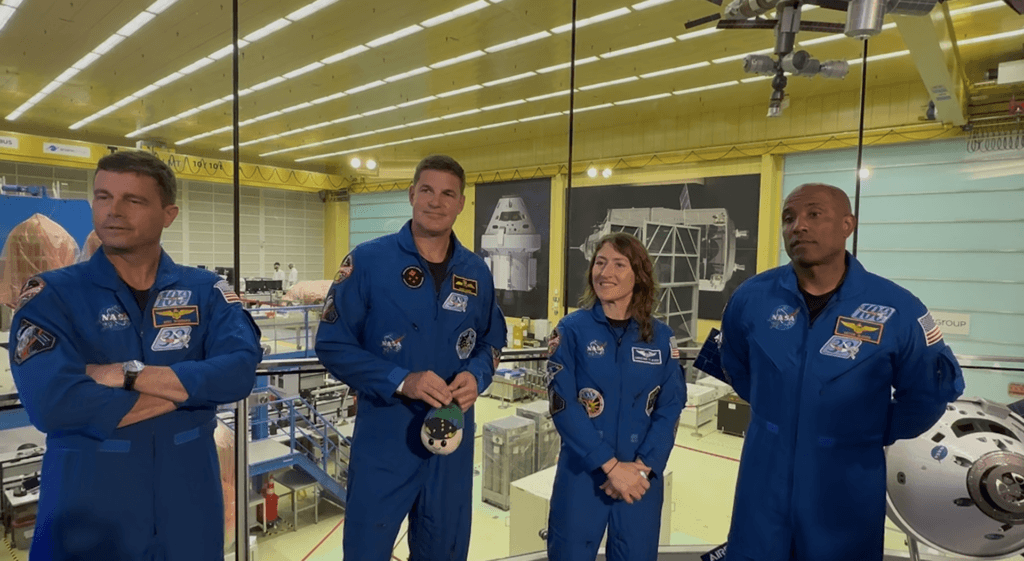
There was no update from me on Tuesday, and I want to tell you why, because it goes to the heart of why I am writing any of this at all. I spent the day in Bremen, with the Artemis II crew – three Americans and a Canadian, who flew around the Moon together in a spacecraft whose heart, the European Service Module, was built in Europe. Standing in front of them, the reason this ISU story matters was hard to miss. What sends people to the Moon is the same thing space education exists to teach: that the hardest things humans attempt, we attempt together, across every border we have invented. None of that crew went to ISU. They did not need to. They are the living proof of the principle ISU was built to serve – and that is exactly why the loss of an institution built to serve it is worth a European space publication spending a week of its life on. I would rather have been a day late and careful than on time and careless.
The students come first, because they always should have
Everything else on this story is about the past. The students are the part that is still live, and this week they started speaking for themselves.
Here is the good news, and it is real. The Master of Space Studies candidates – the MSS26 cohort – are receiving their completion diplomas now, conferred ahead of schedule. I have this from a student holding one, who wrote to me directly, and it is confirmed by ISU Org volunteer Emeline Paat-Dahlstrom. Faculty accelerated the teaching so the cohort could finish. For those students, the degree is safe and it is a full degree.
The harder news sits just underneath it. Students who had enrolled and paid an additional fee for the science-track master – the MSc – are, as things stand, receiving the MSS instead. The problem is plain: those students will not receive an accredited MSc under the dissolved association unless another academic institution steps in to confer it. They paid for one thing and, through no fault of their own, are being offered another, for a programme that was cut short.
And there is a problem almost no one has been talking about, which may be the most urgent of all. Many current students depend on their enrolled-student status to legally hold the internships and thesis placements that come next – the administrative and visa backing that lets them be in the country and in the role. That status flowed from the French association that operated the Central Campus and enrolled them – the entity the Strasbourg court has now liquidated. With that association gone, and with ISU Org, the separate US entity behind ISU Global, not acting as their academic home either, the backing has fallen away. Their host organisations may be forced to end the placements. As one of these students wrote to me, this falls hardest on the non-EU and non-US students – the very people ISU’s international promise was supposed to serve – for whom this internship is often the first foothold in the industry, and the hardest one to regain if it is lost.
So, to any affected student: talk to both groups now working on ISU’s future – the Strasbourg-based staff, faculty and alumni building what they call a New ISU, and the ISU Global volunteers working through the founders’ US entity. Both say they want to help, and I believe both mean it. Look at what each actually offers you, take the help that serves you, and owe no loyalty to anyone’s camp while you do it. An academic institution has also approached SpaceWatch.Global this week offering to help current students with theses and supervision; I will not name them until arrangements are firm, but the offer is real, and it tells you the wider academic community has not walked away. If your degree or your placement is caught in this, write to me and I will point you toward the people trying to help.
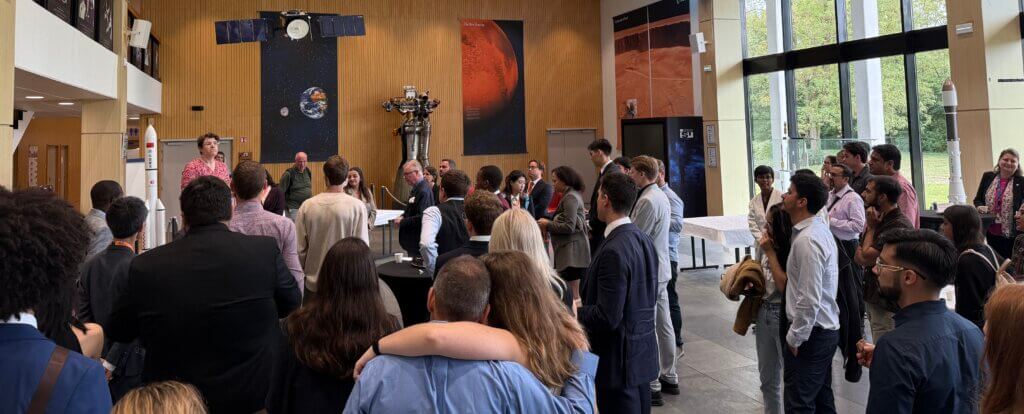
Because these are the questions that now matter more than any other, and unlike most of this story, they can actually be answered – by a willing university, by the liquidator, or by students themselves:
- Will the MSc students who paid for a science-track degree receive an accredited one, and which institution will confer it?
- Who will provide the administrative and student-status backing these students need to complete their internships and theses, now that neither the liquidated French association nor ISU Org does?
- Will the SSP26 participants and their sponsors – ISU Org has referred to more than sixty registered – recover their deposits, and on what timetable?
- And how are current students even to be reached, when their contact details sit only with the court-appointed liquidator? If you are one of them, register directly with the groups offering help – right now, that is the only way they can find you.
Why nobody can simply fix this
Here is the thing that, once understood, dissolves most of the anger I have watched online this week.
When a French court places an organisation into judicial liquidation, control passes – completely – to a court-appointed officer, the liquidator. From that moment, no one else can act. Not the former president. Not the board. Not the staff. Not the founders. Not a sympathetic city, a willing donor, or a well-meaning alumnus with a chequebook. The liquidator decides what is sold, who is paid, in what order, and on what timetable, according to a ranking set by law: the state first, then salaries, then creditors. Student deposits, unless the law is persuaded otherwise, sit in that queue like any other claim.
This is not a camp obstructing another camp. It is not evidence of a plot. It is simply how the process works, and it is why you have seen so little concrete action and so much frustrated silence. People who genuinely want to return a student’s deposit or hand over a contact list may be legally unable to do so unless the liquidator asks them to. When you read someone saying “we tried but our hands are tied,” in this instance that is very likely the literal truth.
I say this not to excuse anyone of anything. There are real questions about the decisions that led into this liquidation. They are for the fuller accounting I come to below. But the paralysis after 7 July is structural, and understanding that should lower the temperature of a conversation that badly needs it.
What is documented, and certain
Let me set out only what rests on documents or on the public record – the things that do not depend on anyone’s private account.
On 7 July 2026, the Commercial Court of Strasbourg ordered the judicial liquidation of the French association that operated ISU’s Central Campus, without continuation. A proposal to keep the association running while funding was sought had been heard on 6 July and rejected. Students were informed on 8 July. The summer Space Studies Program in Strasbourg is cancelled; long-serving staff have lost their jobs. As set out above, the MSS26 cohort is nonetheless receiving its diplomas, conferred early – the one piece of unambiguously good news in this.
In February 2026, ISU’s by-laws were amended. I have read both the version circulated to the membership in January and the version voted at the end of February, and the governance structure of the association was materially changed – including the relationship between the Board of Trustees and the wider governing membership, and the standing of the Academic Council. The elected staff representatives had, months earlier, in September 2025, written to the Board warning that the planned reduction of roughly a quarter of the workforce would put the following year’s revenue at risk. That letter is signed, and the signatories say they received no reply.
International Space University Organization Inc., the Massachusetts non-profit first incorporated in 1987, had lapsed for years and was revived in 2024 – a matter of record in the Massachusetts registry. It is through that entity that the ISU Global initiative now operates. ISU Global, it should be said plainly, is not a separate university and does not present itself as one in its own founding documents: it is an initiative published by ISU Org Inc. On its own public materials, it describes a global campus network as its aim.
And one thing that has been widely misunderstood deserves correcting, because a named participant has said it publicly: in the spring, the shortened summer programme developed through the ISU Global volunteers and the continuation plan developed by the Strasbourg staff were coordinated, not rival. Jim Green, who led the curriculum team, has said so on the record in the community channel. Whatever distance has opened between the two efforts since, it opened in July. It was not there in June.
This week ISU Global also published the names of the roughly three dozen people leading the initiative – the core team, previously referred to as its “guardians.” The list is worth reading against ISU’s own founding words. It is, on its face, heavily North American and predominantly male, weighted toward an older generation, and – as far as I can see – includes no current Central Campus staff and no one based in Africa or Asia. Emeline Paat-Dahlstrom, one of the volunteers, has argued publicly that the group is more international than a first glance suggests. The list is public; readers can look and judge for themselves. But an institution built on the words international and intercultural will, sooner or later, be measured against them – and a network of more than six thousand alumni is a wide pool to have drawn a first team from.
What I cannot yet tell you – and why I won’t pretend otherwise
I have now spoken, at length, with several of the people at the centre of this. Those conversations have been enormously valuable to my understanding. They have also, for the most part, been held on background – which means I know a great deal more than I am able to publish, and I am not going to dress up private accounts as established fact to fill the gap.
That is a real limit, and I would rather you saw it clearly than have me paper over it. There are competing explanations for how ISU arrived at liquidation – about spending, about governance, about who moved which assets and when, about who tried to help and was turned away. Some of these accounts contradict each other flatly. I am not going to adjudicate between them on the strength of conversations that the people involved have not yet been willing to put their names to.
What I will do is keep asking. ISU Org has signalled that at least three articles drawn from interviews with its leadership are expected in the coming days, and a public briefing by ISU’s remaining leadership has also been indicated. When those accounts arrive, on the record, I will report them fairly – including the parts that complicate the story I might otherwise be tempted to tell. The questions that remain open, I will name as open, and leave for the fuller accounting that this institution and its community deserve, and which I hope is eventually done properly, by people with subpoena power and audited books rather than a mailbox.
Ahead of publication I put questions to the Board and to the former President. Dr Wensveen replied, declining to comment and citing the ongoing legal process. On a story where lawyers were advising nearly everyone involved to say nothing, I am grateful to all those who engaged with me at all.
One more thing belongs here, in fairness to everyone reading. People on every side of this have been generous with me this week, and some have been kind about the work. I am grateful, and it changes nothing. Praise from one quarter is worth precisely what criticism from another is: I note it, and I go back to the documents. SpaceWatch.Global is not aligned with any of the groups contesting ISU’s future, and it will not be for as long as this story runs.
What I think – and this part is mine
Everything above I have tried to keep to fact and to fair description. This last part is opinion, and I own it as an alumnus, not as a reporter.
ISU is needed more today than on the day it was founded. When the university began in 1987, its wager was that a shared enterprise in space could pull together people whom politics kept apart. Look at the world this week – at the fracturing, the hardening of borders, the retreat from the international and the intercultural – and tell me that wager matters less now. I came to this story straight from meeting the Artemis II crew in Bremen. Humanity going back to the Moon is one of the few things left that a divided world still does together. An institution built to teach exactly that is not a luxury we have outgrown. It is closer to the opposite.
The campus in Strasbourg was a manifestation of ISU. It was not the whole of it. That is a painful thing to write about a place so many of us loved, and I do not write it lightly – but the essence of ISU was never the building under the flags. It was the people, the network, the credo, the improbable fact of a Chinese and an American and a Russian student in the same classroom. Strasbourg can, I believe, have a future – as part of a wider ISU, rather than as its single, fragile centre of gravity. Whether ISU’s future is one place or many is now a question for the community to answer.
And that is the real test. An institution that spent four decades teaching interdisciplinary, intercultural, international cooperation is now being asked to demonstrate it, in its own crisis, under stress, with feelings raw. The two groups claiming ISU’s future do not have to merge. But they do have to talk – this week – because the people watching them not talk are students who gave their savings and staff who gave their careers, and those people are owed the version of ISU that its own graduates were taught to build.
One ask, from the alumnus and not the publisher
This week I have watched the ISU community do the thing it was built to do – bring documents, cross disciplines, ask hard questions with care. I have also watched some of it do the opposite: half-read threads sharpened into accusations, hindsight dressed up as proof, people who gave decades to this institution named and shamed by people who gave it an afternoon. I understand the anger. This is sad, and bad, and in places genuinely wrong, and every one of us who loves ISU is grieving some version of it. But grief turned into a search for villains is still just grief with a target on it.
So here is my ask. Slow down. Extend the same good faith you would want extended to you. “It looks suspicious in hindsight” is not a finding – it is what hindsight always looks like, and it is not the same thing as a plot. Hold people to account, absolutely, when the facts are in and on the record. Until then, resist the pile-on. The students are watching. The staff are watching. What they see, right now, is whether the three I’s were a curriculum or a character.
ISU is needed, and I believe ISU endures – as an idea bigger than any campus, any board, or any bad year. I trust that. I would ask you to as well.
So, once more, the people in the water
If you are a student caught in this – mid-degree, or holding a deposit for a programme that will not run – reach out. To both efforts, and to me. I will do what I can to connect you to the people offering help, academic and otherwise.
The rest of it – the why, the who, the what-should-have-happened – matters, and it will come. But it can wait a little longer than the students can.
Ad astra.
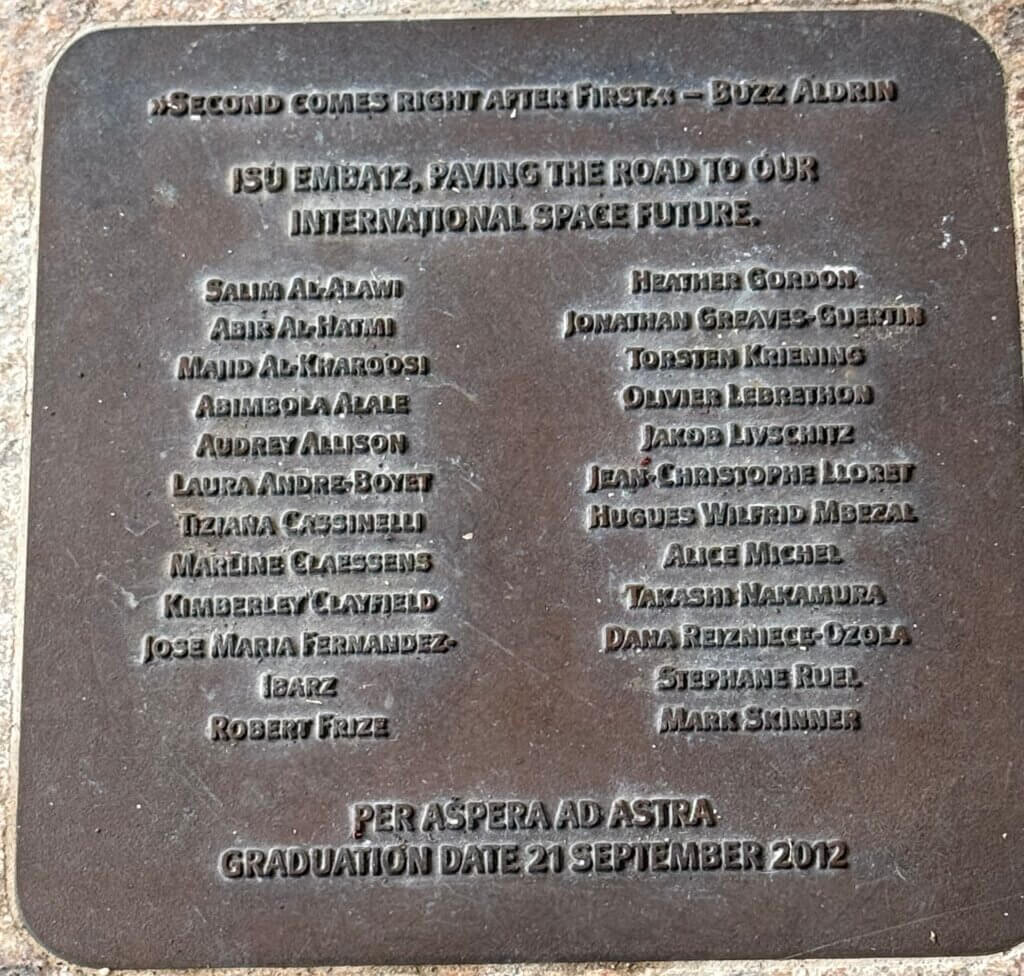
Disclosure: SpaceWatch.Global hosted Dr John Wensveen for a Space Café interview on 31 March 2026. The author is an ISU alumnus (EMBA12).