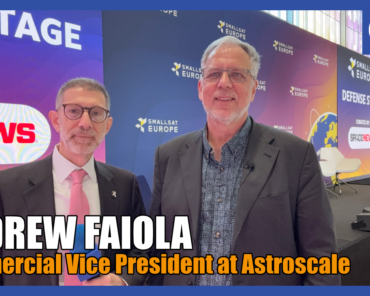
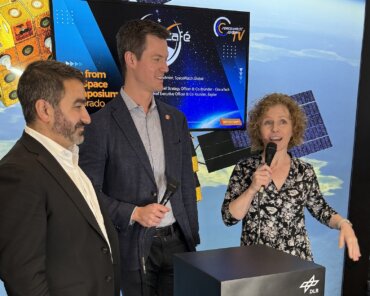
At Space Symposium 2026, Torsten Kriening met with Ron Lopez at Astroscale’s U.S. headquarters in Denver for a deeper look at what comes after satellite deployment.
Inside the symposium halls, conversations kept circling back to interoperability, standards, and burden sharing. Less theory, more coordination. Astroscale’s approach fits squarely into that reality.

Two upcoming missions show where things are heading.
Provisioner, scheduled for launch later this year, is designed to refuel a U.S. government satellite in orbit. Developed with Orbit Fab, it moves refueling from demonstration into operational territory.
Then there is LEXI-P. A geostationary servicing vehicle built to dock, move, and release satellites multiple times. Not a one-off intervention, but a tool for managing fleets over time. It is also designed to be refueled itself, which says a lot about how these systems are being thought about now.
The company has been building out quietly in parallel. New offices in Huntsville and El Paso, a growing team, and continued reliance on international supply chains rather than fully domestic ones. Flexibility seems to matter more than control.
What stands out is how matter-of-fact these capabilities are being discussed. Refueling, repositioning, extending satellite life. Not as future concepts, but as near-term services.
That alone says quite a bit about where the market is heading.