by John Wensveen, Ph.D., President , International Space University (ISU)

Israel Space Week, held from 26–29 January 2026, was a major success, engaging communities across Israel while welcoming international delegates from government, industry, academia, and the global space ecosystem. The week showcased Israel’s growing role as a spacefaring nation and underscored the importance of education, inspiration, and international collaboration in shaping the future of space activities.
One of the highlights of the week was the Ilan Ramon International Space Conference, which brought together senior leaders, astronauts, policymakers, educators, and innovators to explore critical issues facing the global space sector. Named in honor of Israel’s first astronaut, the conference served as a powerful platform for dialogue on the future of space exploration, technology, and human capital development.
The conference and the broader program of activities throughout Israel Space Week were expertly organized by the Rakia Mission, which did a fantastic job convening global stakeholders and supporting a wide range of space-focused events across the country. Through its leadership and coordination, the Rakia Mission ensured a cohesive, high-impact week that connected public engagement, education, policy, and international collaboration.
ISU Leadership on the Global Stage
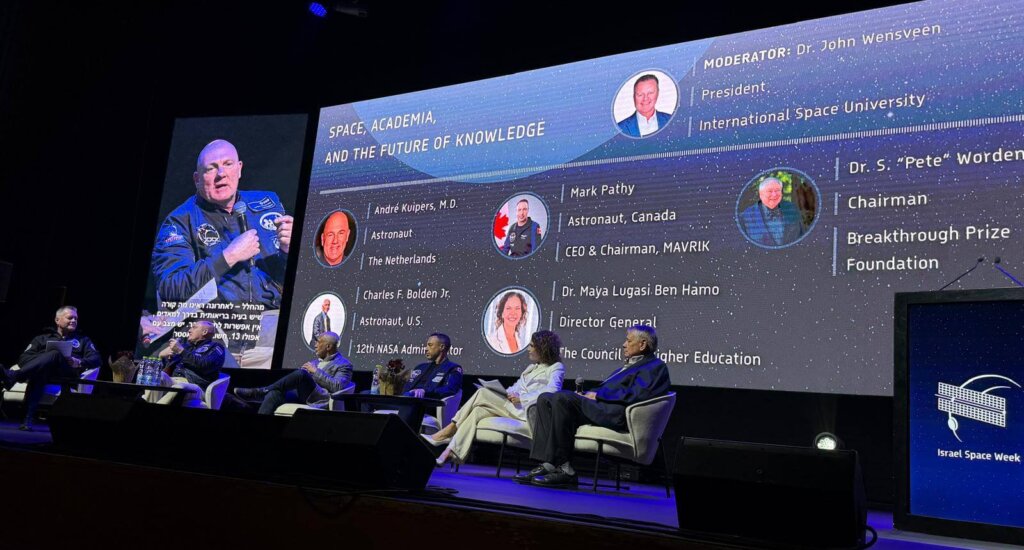
The International Space University (ISU) played a visible role during the conference, reinforcing its long-standing mission to advance interdisciplinary space education and foster international cooperation. ISU President Dr. John Wensveen moderated one of the main stage panels, titled “Earth to Orbit – Inspiring the Next Generation of Space Professionals.”
The panel, “Space, Academia, and the Future of Knowledge,” brought together an exceptional group of global space leaders:
- Astronaut Charlie Bolden, 12th NASA Administrator
- Astronaut Dr. André Kuipers, The Netherlands
- Astronaut Mark Pathy, Canada
- Dr. S. “Pete” Worden, Chairman, Breakthrough Prize Foundation
- Dr. Maya Lugasi Ben Hamo, CEO, Council for Higher Education
Moderated by Dr. Wensveen, the discussion focused on the evolving relationship between space, higher education, and the future workforce. Panelists emphasized that as space activities expand beyond traditional government programs into commercial, entrepreneurial, and dual-use domains, the need for interdisciplinary education has never been greater.
A recurring theme was the importance of inspiring and preparing the next generation—not only engineers and scientists, but also professionals equipped to navigate policy, business, ethics, sustainability, and international collaboration. The panel highlighted how astronauts increasingly serve as educators, mentors, and ambassadors, translating the experience of space into lessons that resonate far beyond orbit.
Space Tech – Trends & Forecasts 2035
Another well-attended event during Israel Space Week was “Space Tech – Trends & Forecasts 2035,” which featured several keynote speakers and panel discussions focused on the long-term trajectory of the space sector. The event provided valuable insight into the trends, challenges, opportunities, and strategies shaping the future of space activities over the next decade and beyond.
Discussions explored the accelerating convergence of space with digital technologies, data analytics, artificial intelligence, climate monitoring, security, and commercial services, as well as the implications for policy, regulation, workforce development, and international cooperation. The event reinforced the importance of forward-looking, systems-level thinking as governments, industry, and academia navigate an increasingly complex and competitive space environment.
ISU Alumni Reception & MOON SHOT 2030 Update
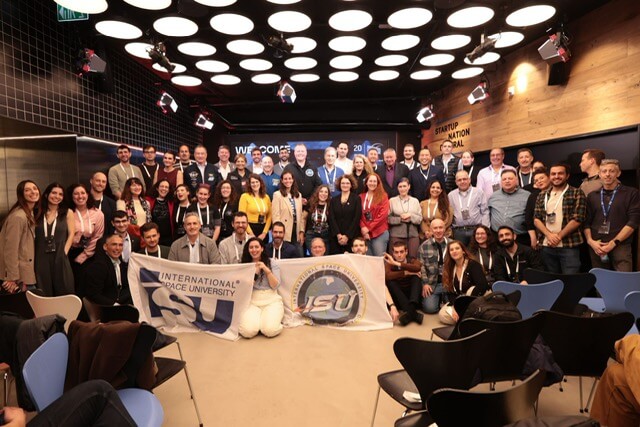
Another highlight of Israel Space Week was the ISU Alumni Reception, which brought together more than 150 alumni, partners, astronauts, and space leaders for an exceptional evening of connection, inspiration, and dialogue. The event powerfully showcased the strength, reach, and influence of ISU’s global alumni network, now numbering more than 6,000 professionals worldwide.
The evening featured an extraordinary astronaut panel with Eytan Stibbe, ISU Chancellor, Michael López-Alegría, Dr. Garrett Reisman, Julie Payette, and Dr. Sian Proctor. The panelists offered candid reflections on leadership, exploration, international cooperation, and the evolving human role in space—captivating the audience and reinforcing ISU’s unique position at the intersection of space, society, and innovation.
Special recognition was extended to Dr. S. “Pete” Worden, ISU Board of Trustees, for his engaging and thought-provoking presentation, and to Ofer Lapid for his inspiring remarks and continued support of the ISU community.
During the reception, ISU President Dr. John Wensveen shared a strategic update on ISU’s MOON SHOT 2030 plan, outlining progress toward financial sustainability, academic and program innovation, expanded global partnerships, and the development of new education, executive, and workforce development initiatives. The update highlighted how ISU is positioning itself to meet the needs of a rapidly evolving global space economy while remaining true to its founding mission.
The reception was made possible through the outstanding support of the Rakia Mission, with special thanks to Melody Korman and her team for hosting and delivering an exceptional event. The evening served as a powerful reminder that ISU’s alumni are not only its greatest ambassadors, but also a critical pillar of the university’s future success.
Looking Ahead
Beyond formal sessions and events, Israel Space Week provided valuable opportunities for engagement with Israel’s dynamic space ecosystem, widely recognized for its innovation, entrepreneurial spirit, and strong links between academia, industry, and government. These interactions align closely with ISU’s strategic focus on expanding regional partnerships and strengthening pathways for education, executive training, and workforce development.
As the global space economy accelerates, events such as Israel Space Week and the Ilan Ramon International Space Conference play a vital role in convening stakeholders, sharing perspectives, and inspiring future leaders. ISU’s participation reaffirmed its commitment to advancing space education as a cornerstone of sustainable, peaceful, and inclusive space activities—connecting Earth to orbit through knowledge, collaboration, and inspiration.