By Mr. Samuel Jardine and Dr. Antonino Salmeri
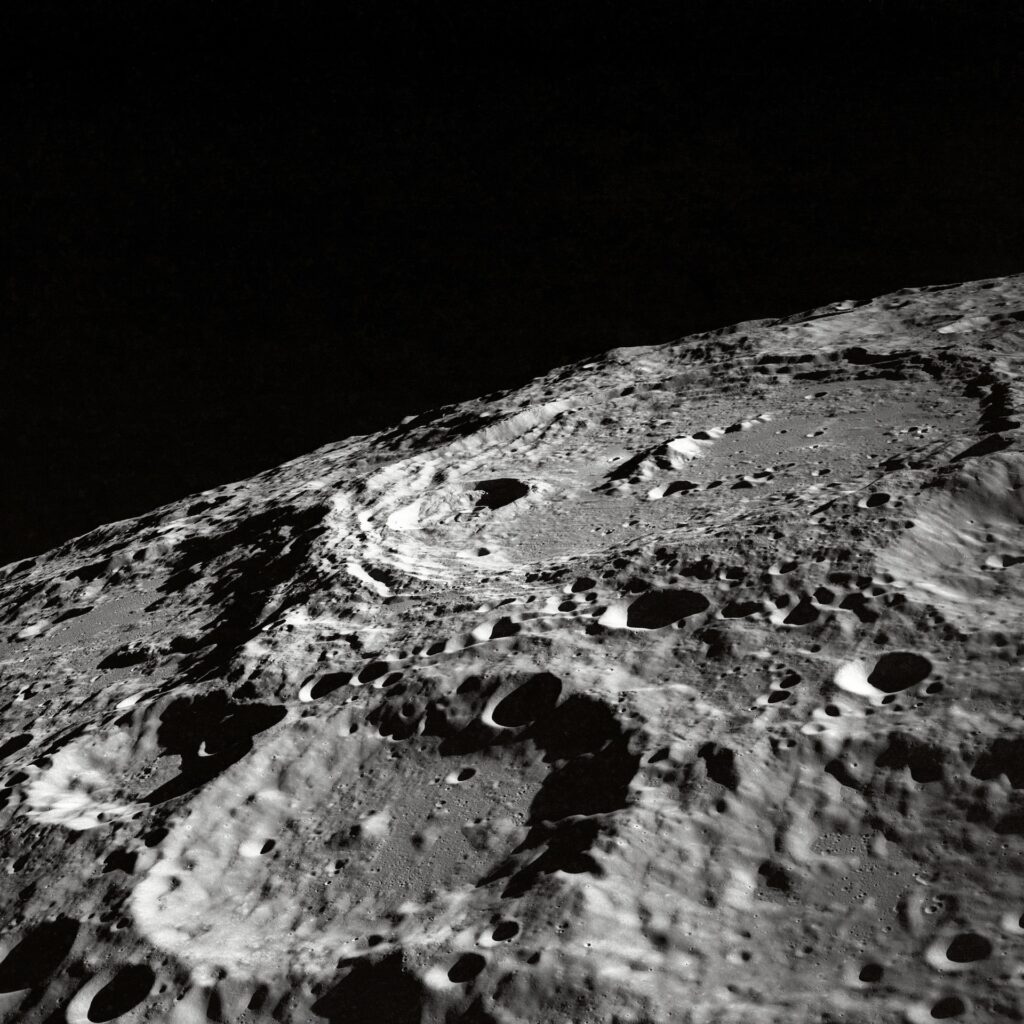
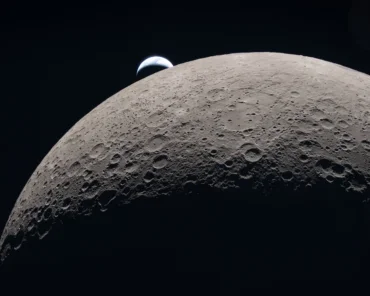
A new wave of lunar activity is underway. More missions reached the Moon in 2024 than in any year since 1969. Scientific instruments are being deployed, landing zones mapped, and infrastructure already operated and more proposed to support long-term operations. With each new announcement, it becomes clearer that we are entering a new era, not of lunar ambition, but of lunar presence.
Historically, science has been the central pillar of lunar and planetary exploration. While this remains the case at large for now, current and future lunar ambitions have started to expand to also incorporate economic, security, geopolitical and strategic ambitions. Alongside being an extraordinary archive of the Earth’s history and that of the early Solar System and a pristine platform for astronomy and even solar sciences, the Moon is now being considered as a testbed for technology development, a unique site for off-world infrastructure and long-term living, and a potentially new domain of commercial activity.
It’s no surprise then that many voices in the global space community, especially scientific stakeholders, are getting increasingly concerned about potential interference and harmful contamination of the fragile lunar environment, voicing the need to designate and protect Sites of Special Scientific Interest (SSSI). Additionally, many actors worry about commercial interests in using the Moon for purposes such as storing human remains or strip-mining regolith at large scales for helium 3, metals, and other resources.

These concerns, while compelling, are not universally straightforward. Other stakeholders are raising important questions, among them: How can we protect science while facilitating an increasingly diverse array of activity? And if access is restricted in some way in the name of science, who decides which science, and whose science, takes priority? It can also be argued that more global and commercial infrastructure will increase the scientific output overall due to ease of operations, more democratic access, and lower costs.
To better understand this rapidly evolving and intricate landscape, we at the Lunar Policy Platform (LPP) spent the past 6 months consulting key scientific organisations and independent civil society organisations worldwide to understand nuances of lunar science and ethical implications of growing human activity on the Moon. Based on the views expressed, we have developed a unique Guide to Lunar Science and Ethics, whichpresents key scientific, ethical and cultural interests in lunar activities, and potential requirements needed for their preservation. Building upon this foundational work, LPP recently signed a multi-year MoU with two of the most important scientific organisations in the space sector, the Committee on Space Research and the International Astronomical Union, to continue this important discussion and work together towards the development of principles and practices for a balanced approach.
Sites of high scientific value are also sites of high political and ethical complexity
Certain lunar regions, such as the permanently shadowed regions at the poles and the radio-quiet far side, are widely recognised as being of exceptional scientific importance. They offer a rare opportunity to study volatiles like water ice, study the early universe, discern planetary processes that have shaped the late Solar System, and monitor the lunar exosphere. They are, in short, irreplaceable. These unique areas are also scarce in nature, which in turn may lead to their contestation.
For many, the Moon holds cultural and spiritual significance. One key finding from the consultations is that the ethical legitimacy of lunar activities may also depend on meaningful procedural inclusion and pluralistic governance from all stakeholders. That includes open discussions about what kind of activity is welcome on the lunar surface, and why.
Some stakeholders highlighted the need for large protective zones, up to 50 kilometres in some cases, to prevent contamination and preserve data integrity for fundamental scientific activities. Others suggested phased access restrictions until scientific protocols and environmental standards can be agreed upon multilaterally. These proposals come from a legitimate concern that damage to these sites could be irreversible, especially because of the harsh nature of lunar dust and the dynamics of the airless lunar environment. Science may lose out in a scramble for resource and infrastructure access.

Still, other stakeholders expressed concern that restricting legitimate activity by others would not be fully in line with the foundational principles of the Outer Space Treaty, especially the principle of free access to all areas of celestial bodies. Further, these proposals risk setting precedents that could unintentionally pave the way for a colonialist approach to lunar activities.. A site “reserved for science” could appear functionally equivalent to others as territorial appropriation, and may set a precedent of similar zoning for other activities that may end up diminishing the opportunities for science in the long run on the Moon and other celestial bodies. If science is treated as inherently superior to other forms of lunar engagement, the Moon could quickly become a gated domain—even if unintentionally.
One Size Does Not Fit All
One of the strongest messages from stakeholder consultations is that science is shaped by the cultures, institutions, and funding streams that support it. While many scientific actors are motivated by discovery, others are tightly coupled with national space programmes, commercial, or strategic objectives. As such, the concept of “scientific importance” is inevitably influenced by tangential ones, including commercial and geopolitical. It’s also worth remembering that the biggest leap in planetary science vis-à-vis collecting offworld samples to ascertain the Moon’s origin technically came through the Apollo program, motivated by geopolitical reasons.
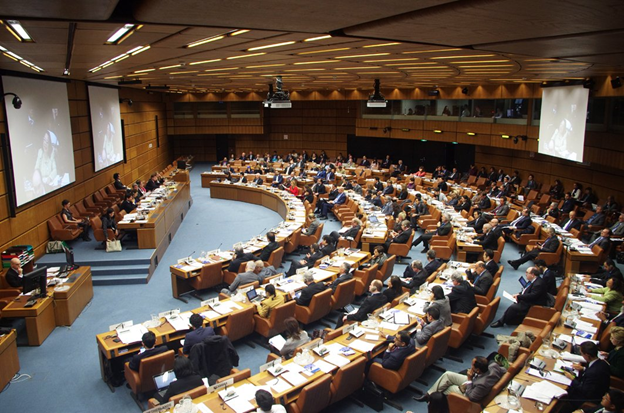
Unsurprisingly, another key finding from the consultations is that there is no one universally accepted definition of what “science” actually constitutes, whether it needs special protections or privileges, and what they would look like. Similar points emerged, for example, during the meetings of the UN Working Group on the Legal Aspects of Space Resource Activities at this year’s session of the UN COPUOS Legal Subcommittee. While reviewing its Draft Principles for the first time, the Working Group heard a diversity of opinions on the potential prioritisation of space resource activities conducted for scientific purposes.
Rethinking the Narrative: Inclusive Preservation
As lunar development accelerates, it is tempting to fall back on familiar scripts: that science is neutral, that preservation requires exclusion, and that responsible actors will defer to experts. But the Moon is not just a research site. It is a commons, a canvas, and, for many, a mirror of our highest ideals.
One possible way forward is to detach the principle of preservation from the practice of exclusion. We can design governance tools that protect fragile sites without prioritising any one specific activity. Shared-use protocols, adaptive zoning, and rotational access are all terrestrially tested mechanisms that could allow multiple actors to coexist, without creating oppositions between interests or placing any particular one above all the others.
Any activity on the airless Moon leaves a permanent mark. Exploring and using the Moon inherently means that our natural satellite will not stay pristine. But it can remain shared, and alterations can be accepted within a margin agreed upon by everyone. The challenge is to find that shared margin, ensure that protection does not entrench inequality, and that managed access does not become a proxy for power plays.
The Guide to Lunar Science and Ethics shows that there is no single unified viewpoint, and therefore no single unified solution. For the first time, the document clearly outlines the richness and complexity of views on how to explore our only celestial neighbor, reminding us that access in itself is a political and ethical act, not just a logistical challenge.
In the years ahead, scientific activity will, and should, play a leading role on the Moon. But the governance frameworks we build must leave room for others: for artists and astronauts, for engineers and ethicists, for commercial operators and cultural communities, and more. Before focusing on what we want to learn and get from the Moon, it may perhaps be best to recognise what we owe to each other when we get there.
Dr. Antonino Salmeri is a space lawyer specialized in the governance of lunar and space resource activities, currently working as Director of the Lunar Policy Platform (LPP). Dr. Salmeri holds four advanced degrees in law and is the author of leading international publications in the field of space law and policy. Through his work at LPP, Dr. Salmeri leads the development of impactful policy documents promoting the peaceful, safe, and sustainable conduct of lunar activities, and advises governments, companies and scientists on the strategic, legal and policy aspects of their lunar endeavours.

Samuel Jardine is a geopolitical consultant, with expertise in strategic competition, governance, and geopolitical risk in space, the polar regions and the seabed. Currently, Sam is the Policy Specialist at the Lunar Policy Platform and is Head of Research at London Politica, Senior Advisor at Luminint, and a Research Associate for Oxford University and CHACR’s Climate Change & (In)Security Project. He is also a Research Fellow with the Open Lunar Foundation and a Research Affiliate with the Centre for Space Governance. Sam holds an MA in Modern History from King’s College London and a BA in History from the Open University and was a RUSI Military Sciences “Rising Stars” mentee.