Ibadan, 14 January 2025. – TALOS, a Munich-based NewSpace startup interested in animal tracking as well as IoT technologies has signed a 4-year cooperation agreement with the Max Planck Society to launch ICARUS 2.0. This will be a fleet of at least five CubeSats tracking animal movements, providing the Max Planck Society with access to the technology and collected data.
As a result, the partnership aims to define the next generation of satellite-based animal tracking and create unprecedented opportunities for global science and conservation. The original ICARUS system, on the International Space Station (ISS), was developed in collaboration with the Russian space agency, Roscosmos. However, ICARUS 2.0 will operate independently with its dedicated fleet of at least five CubeSats in low Earth orbit (LEO).
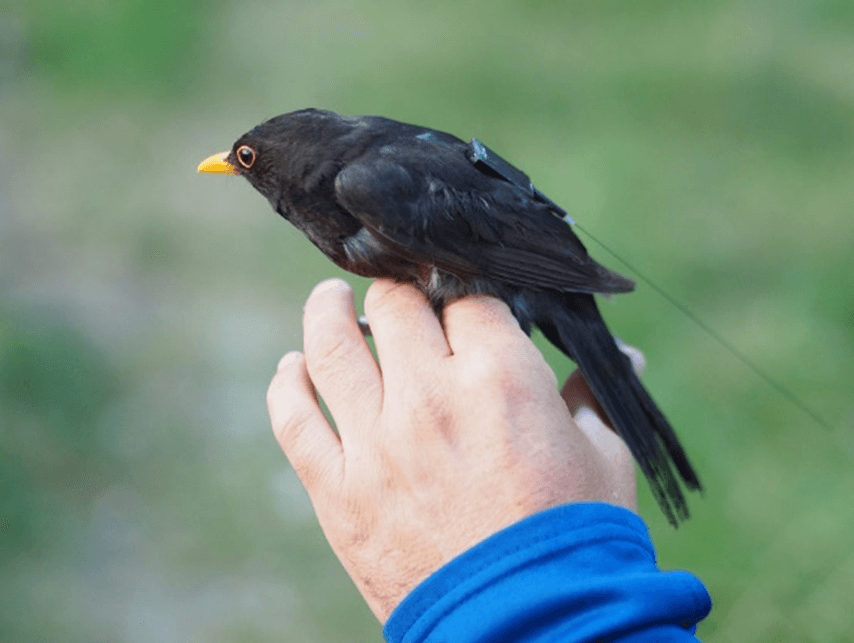
The advanced system will enable high-precision tracking of animals with GPS accuracy. Additionally, it will provide researchers with animal location updates at least once a day, with the potential for updates up to five times daily, once all five satellites are operational. Moreover, the five-gram tags attached to animals will measure temperature, humidity, pressure, and acceleration, offering a comprehensive dataset to support diverse research objectives.

The ICARUS 2.0 mission aims to launch the CubeSat constellation in phases, with the first CubeSat consequently launching in the fall of 2025. TALOS subsequently expects the full constellation of five satellites to be operational by the end of 2026.
Expressing enthusiasm about the collaboration, Gregor Langer, CEO of TALOS, remarked, “ICARUS 2.0
represents a transformative leap in animal tracking and environmental science. Together with the
Max Planck Society, we are empowering scientists worldwide to gain deeper insights into our planet’s ecosystems and the movements of animals on an unprecedented scale.”